
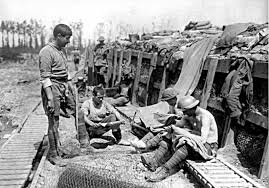
Names that you will probably all recognise have two things in common. Festubert, Richebourg, Laventie, Aubers, Fleurbaix, Bois Grenier and Armentieres are all in French Flanders, that is just south of the Franco-Belgian border and all were elements of the Western Front manned by the British in January 1915, one hundred and eleven years ago.
By January 1915, the Western Front had settled down into static trench warfare and we think of deep trenches and even deeper dug outs, especially as constructed by the Germans in the chalk to be found on the Somme.
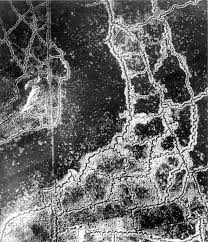
However, in French Flanders, especially in the winter, the water table was so high that it was impossible to dig trenches very deeply before you hit water and ended up with a flooded trench and all of the associated problems of collapsing trench walls and of course, discomfort for the men, including the terrible illness that was ‘trench foot’.
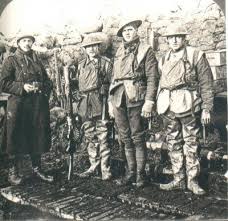
Many British soldiers were supplied with Wellington Boots or galoshes, in an attempt to relieve the discomfort and stop trench foot from setting in in the first place.
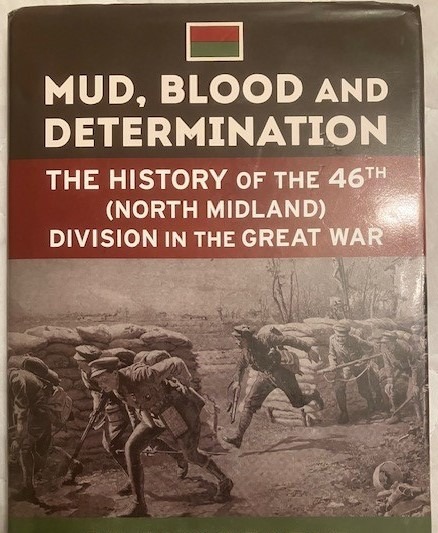
So, what was the answer? From the autumn of 1914, as the trench lines became established, trenches were erected as breastworks, that is above ground barricades of sand bags and timber. The front cover of Mud, Blood and Determination shows soldiers of the 46th Division running the gauntlet of German snipers by dashing past a gap in the sandbagged trench wall.
Eventually, these sandbag trench walls could be as much as 15 or 20 feet wide and protected by wide belts of barbed wire, almost impossible for attacking troops to assault, as machine gun positions were loop holed into the sandbag wall.
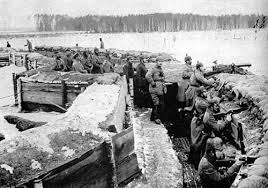
It was attacking German positions like those described above, that caused such grievous casualties for the men of the BEF in May 1915 at Aubers and Festubert. German strongpoints such as the ‘Sugar Loaf’ and ‘The Boar’s Head’ proved impossible to approach, never mind attack.
Where excavation was attempted, the winter rain made life in the trenches almost unbearable and this photograph of Colonel Philip Robertson, CO of the 1st Cameronians (Scottish Rifles), attempting to visit his men in the front line in January 1915 at Bois Grenier, proves the point.
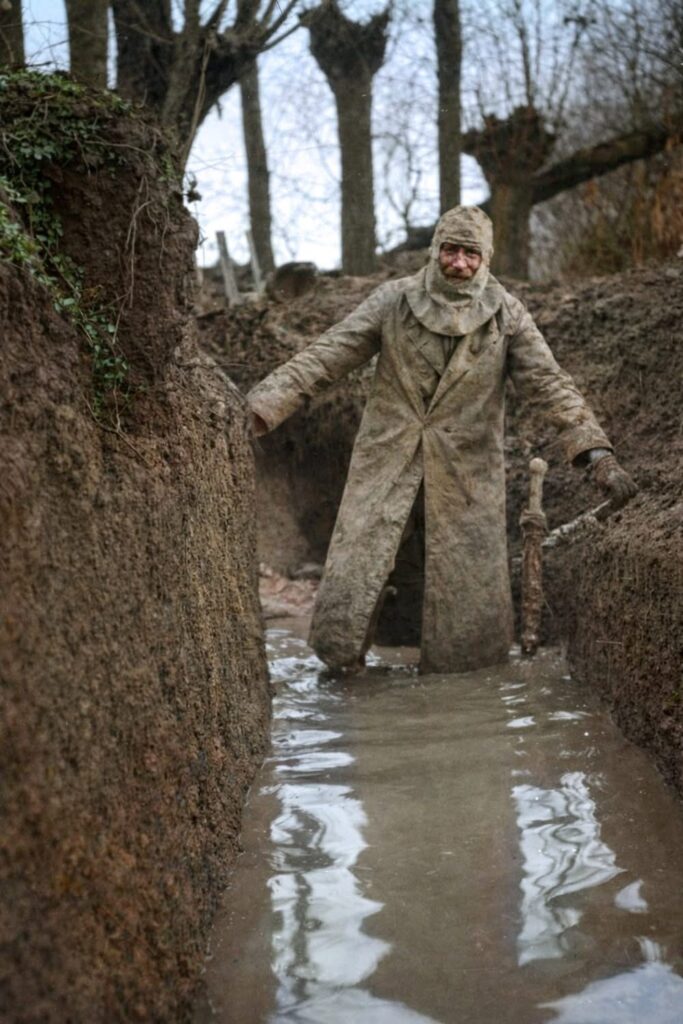
January 1915
Image: © IWM (Q 51569) Photo by Lt. Robert Money
Whilst most British battlefield visitors to the Western Front concentrate on the Somme and the Ypres Salient, these less visited 1915 battlefields are well worth a trip. The ground is mainly very flat and open, and although it is all heavily cultivated today, it is still possible to walk and follow tracks that appear on 1915 maps and which still exist today.
If a trip appeals, please do not hesitate to contact me if you require any help in putting an itinerary together.