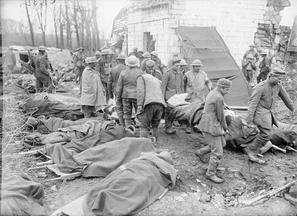
April 9th was the 109th anniversary of the opening day of the Battle of Arras. A battle which is overlooked in comparison to the Somme and Passchendaele, but which produced higher daily casualty rates for the BEF than both the Somme and 3rd Ypres (Passchendaele).
The Battle of Arras was one of the major British offensives on the Western Front during World War I. Fought between April and May 1917 near the French city of Arras, it formed part of a broader Allied strategy to break the stalemate of trench warfare. The battle is especially remembered for its dramatic opening day on April 9th, 1917, which saw some of the most significant territorial gains achieved by British forces since the war began.
The offensive was closely coordinated with the larger French effort known as the Nivelle Offensive. While French forces attacked along the Aisne River, British troops were tasked with drawing German reserves northward and exploiting any breakthrough opportunities. The British Army, under the command of Douglas Haig, prepared meticulously for the assault, learning lessons from earlier costly battles such as the Battle of the Somme.
Preparation for the Battle of Arras was extensive and innovative. One of the most remarkable aspects was the construction of vast underground tunnels beneath the city. These tunnels, many of them expanded from medieval chalk quarries, allowed tens of thousands of soldiers to assemble in secrecy, protected from German artillery. By early April, around 24,000 troops could be housed underground, ready to emerge close to the front lines. This element of surprise would prove crucial on the opening day.
The British also refined their artillery tactics. Instead of prolonged bombardments that warned the enemy of an impending attack, they employed shorter, more intense barrages combined with precise targeting based on improved intelligence and aerial reconnaissance. The use of a “creeping barrage,” where artillery fire moved forward in stages just ahead of advancing infantry, helped protect soldiers as they crossed No Man’s Land. Coordination between infantry, artillery, and supporting units was far more sophisticated than in earlier offensives.
The opening day, April 9th 1917—Easter Monday—began in harsh conditions, with snow, sleet, and strong winds sweeping across the battlefield. Despite the weather, British and Dominion forces launched their assault at dawn. Among them, the Canadian Corps played a pivotal role in the attack on Vimy Ridge, a heavily fortified German position that had resisted previous Allied attempts.
The Canadian Corps’ assault on Vimy Ridge stands out as one of the most successful actions of the day. Carefully planned and rehearsed, the attack involved all four Canadian divisions advancing together for the first time. They used detailed maps, mock battlefields for training, and precise timing with the creeping barrage. By the end of the day, most of the ridge had been captured—a remarkable achievement given its strategic importance and the strength of German defences. The capture of Vimy Ridge provided the Allies with a commanding view over the surrounding plains and boosted morale significantly.
Elsewhere along the front, British forces also made notable gains. Infantry units advanced several miles in some sectors, capturing key villages and defensive lines. Compared to earlier battles, casualties on the first day, though still heavy, were proportionally lower relative to the scale of the advance. Approximately 13,000 German prisoners were taken on April 9th alone, reflecting the effectiveness of the surprise and coordination achieved by the attackers.
However, despite the success of the opening day, the broader objectives of the Battle of Arras were not fully realised. In the days and weeks that followed, German forces regrouped and reinforced their lines, slowing the Allied advance. The British, forgetting the lessons that had brought success, reverted to a more familiar pattern of attrition, with costly attacks yielding limited additional gains. The initial momentum proved difficult to sustain against determined German defence and increasingly challenging conditions.
The opening day of the Battle of Arras remains significant for several reasons. It demonstrated that the British Army had evolved tactically, integrating artillery, infantry, engineering, and intelligence more effectively than before. The success at Vimy Ridge, in particular, became a defining moment in Canadian national history, symbolising unity and achievement.
In a broader sense, the battle illustrated both the possibilities and limitations of offensives on the Western Front. While careful planning and innovation could achieve breakthroughs on a local scale, turning those gains into a major breakout remained elusive. The experience of Arras would influence later operations, contributing to the development of more effective combined-arms tactics. This would be demonstrated at Cambrai in November 1917 and will be the subject of my new talk at FoLT in late October this year.
In conclusion, the Battle of Arras, and especially its opening day, stands as a moment in World War I, where combined meticulous preparation, tactical innovation, and determined action would achieve impressive early gains. Yet it also underscored the enduring challenges of trench warfare, where even the most promising beginnings often gave way to prolonged and costly attrition.
Ah!! I here you say, what about the tanks?
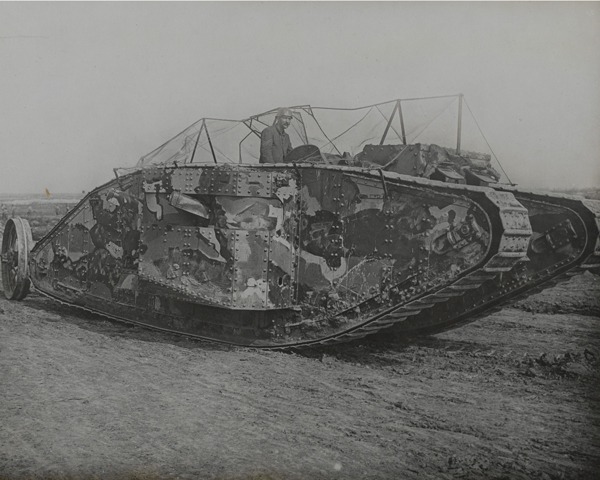
The use of tanks at the Battle of Arras was still relatively experimental, reflecting how new and evolving this technology was during World War I. Although tanks had first appeared in combat at the Battle of the Somme the previous September, Arras was one of the early attempts to integrate them more deliberately into offensive planning—though with mixed results.
By April 1917, the British Army deployed early models such as the Mark I and Mark II tanks. These machines were slow, mechanically unreliable, and vulnerable to artillery, but they offered a potentially powerful advantage: the ability to cross trenches, crush barbed wire, and provide mobile cover for advancing infantry.
At Arras, tanks were used in relatively small numbers compared to later battles. Around 60 tanks were allocated to support parts of the offensive, particularly in sectors where breaking through strong German defensive lines was considered most difficult. However, many never reached the front line in working condition due to breakdowns—one of the most persistent problems with early tank warfare. This was especially apparent at Bullecourt, where the attacking Australian infantry went ‘over the top’ without the promised tank support, due to their late arrival. This led to a mutual distrust of the Tank Corps by the Australians until the summer of 1918, when the more reliable MKIV and MKV’s were available.
In summary, tanks at the Battle of Arras were present but not decisive. The opening day’s success came primarily from improved artillery tactics and careful planning rather than armoured support. However, Arras represents an important day in the evolution of tank warfare—demonstrating both the potential and the serious limitations of early tanks.
Their performance at Arras helped shape how tanks would be used later in the war, eventually becoming a key element in breaking the stalemate of trench warfare.