
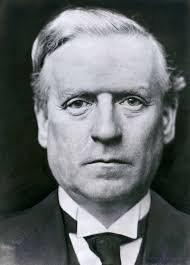
The formation of the coalition cabinet in the United Kingdom in May 1915 was one of the most significant political developments of the First World War. It marked the end of purely Liberal government and the beginning of a new political arrangement in which the major parties united to face the national crisis. The coalition was formed against a background of military failure, political tension, and growing public dissatisfaction with the conduct of the war.
When the First World War began in August 1914, Britain was governed by a Liberal administration led by Prime Minister Herbert Henry Asquith. At first, there was broad political unity as the country entered the conflict. The Conservative opposition, led by Andrew Bonar Law, agreed to support the government’s war effort, and partisan politics were largely suspended. However, as the war dragged on into 1915, criticism of Asquith’s government began to increase. The war was proving far more difficult and costly than had been expected, and Britain’s military leadership was coming under intense scrutiny.
One of the key causes of the crisis was the shortage of artillery shells on the Western Front, often referred to as the “shell crisis.” In the spring of 1915, reports from British commanders in France revealed that insufficient supplies of high-explosive shells had contributed to failures in battle, particularly at Neuve Chapelle. The issue became public when The Times published a highly critical article on 14 May 1915 accusing the government of failing to supply the army adequately. This caused outrage and damaged confidence in Asquith’s administration. The press, especially newspapers owned by Lord Northcliffe, intensified criticism and portrayed the government as inefficient and unprepared for modern warfare.
At the same time, the Gallipoli campaign was proving disastrous. This military operation, designed to force the Dardanelles and knock the Ottoman Empire out of the war, had been strongly supported by Winston Churchill, First Lord of the Admiralty. However, poor planning and heavy casualties turned the campaign into a costly failure. Churchill’s reputation suffered greatly, and questions were raised about the competence of the entire government. The combination of the shell crisis and Gallipoli undermined public confidence and gave political opponents an opportunity to challenge Liberal leadership.
The Conservatives, while officially supportive of the war effort, recognised the government’s weakness. Bonar Law was approached by senior Conservatives who believed that national unity could only be maintained if their party entered government directly. They argued that a coalition would strengthen public confidence and improve administration. Bonar Law informed Asquith that Conservative support could not continue on the same basis and that a coalition government was now necessary.
Asquith faced a difficult decision. He had been reluctant to share power with the Conservatives, partly because many Liberals feared that coalition would dilute Liberal principles and undermine party identity. Nevertheless, the military and political situation was too serious to ignore. On 17 May 1915, Asquith announced his intention to reconstruct the government as a coalition. Negotiations began immediately between Liberal, Conservative, and Labour leaders.
The coalition cabinet was formally announced on 25 May 1915. It included members of the Liberal Party, the Conservative Party, and the Labour Party, making it the first true multi-party coalition government in modern British history. Asquith remained Prime Minister, preserving Liberal leadership, but key Conservative figures were brought into major positions. Bonar Law became Colonial Secretary and effectively leader of the House of Commons. Arthur Balfour replaced Churchill as First Lord of the Admiralty. Labour was represented by Arthur Henderson, who became President of the Board of Education and the first Labour politician to sit in the British Cabinet.
One of the most important innovations was the creation of the Ministry of Munitions, headed by David Lloyd George. This was a direct response to the shell crisis and represented a major reorganisation of wartime production. Lloyd George proved highly effective in mobilising industrial resources, increasing munitions output, and introducing stronger state control over the economy. His success enhanced his political standing and would later help him replace Asquith as Prime Minister in 1916.
The coalition was intended to create national unity and improve efficiency in wartime administration. It brought together talented politicians from different parties and reassured the public that the government was taking decisive action. It also reduced partisan criticism by making the opposition partly responsible for government policy. However, the coalition also exposed tensions within parties. Many Liberals felt betrayed by the inclusion of Conservatives, while some Labour supporters worried that participation compromised their independence.
Although the coalition strengthened the government in the short term, it marked the beginning of the decline of the Liberal Party as a dominant force in British politics. The internal divisions created by coalition, particularly between supporters of Asquith and Lloyd George, weakened Liberal unity. Meanwhile, Labour gained legitimacy as a national governing party, while the Conservatives increased their influence over wartime decision-making.
The formation of the coalition cabinet in May 1915 therefore represented both a response to immediate wartime crisis and a turning point in British political history. It was born out of necessity, driven by military setbacks and public criticism, but its long-term consequences were profound. It changed the structure of British government, accelerated state intervention in the economy, and reshaped the balance of political power for decades to come. In many ways, it marked the beginning of coalition politics in Britain and reflected the immense pressures that total war placed upon traditional political institutions.
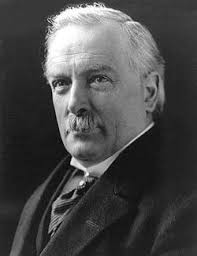
David Lloyd George