The Battle of Messines, fought on 7 June 1917 during the First World War, was one of the most significant and carefully planned Allied victories on the Western Front. Although often overshadowed by larger and bloodier battles such as the Somme and Passchendaele, Messines was an important military success that demonstrated the value of preparation, engineering innovation, and tactical coordination. It marked a turning point in British offensive operations in 1917 and provided an example of how modern warfare could be fought effectively against entrenched positions. The battle’s importance lies in its strategic context, its use of innovative military techniques, its psychological effect on both sides, and its influence on later operations during the war.
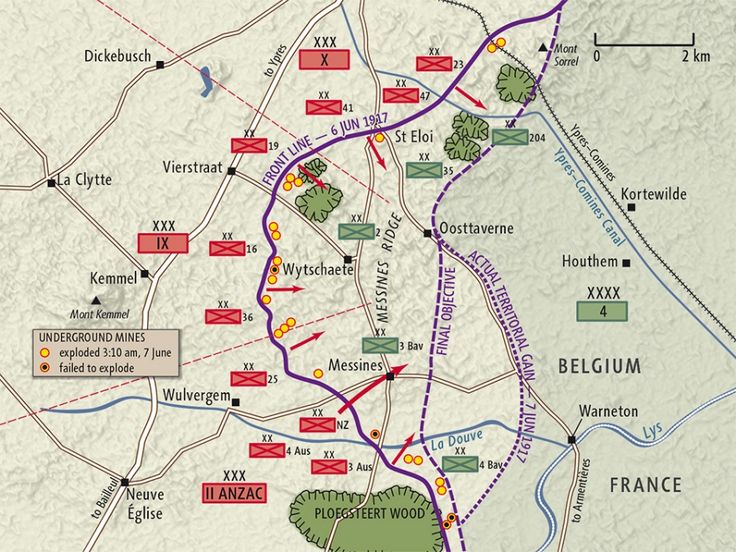
The Battle of Messines took place near the village of Messines in Belgium, south of Ypres. This area had been under German control since 1914 and formed part of a strategically important ridge that overlooked British positions in the Ypres salient. The Germans held the high ground, which gave them a major advantage for observation and artillery targeting. British troops stationed below were vulnerable to enemy fire and found it difficult to prepare offensives without being seen. Capturing the Messines Ridge was therefore essential if the British were to improve their defensive position and launch future attacks in Flanders.
The battle was planned by General Sir Herbert Plumer, commander of the British Second Army. Plumer believed in careful, methodical warfare rather than the large-scale frontal assaults that had caused such devastating losses earlier in the war. He insisted on detailed preparation, coordination between infantry and artillery, and clear objectives. His planning for Messines reflected lessons learned from previous failures on the Western Front, particularly the Somme in 1916, where poor coordination and over-optimism had led to disaster.
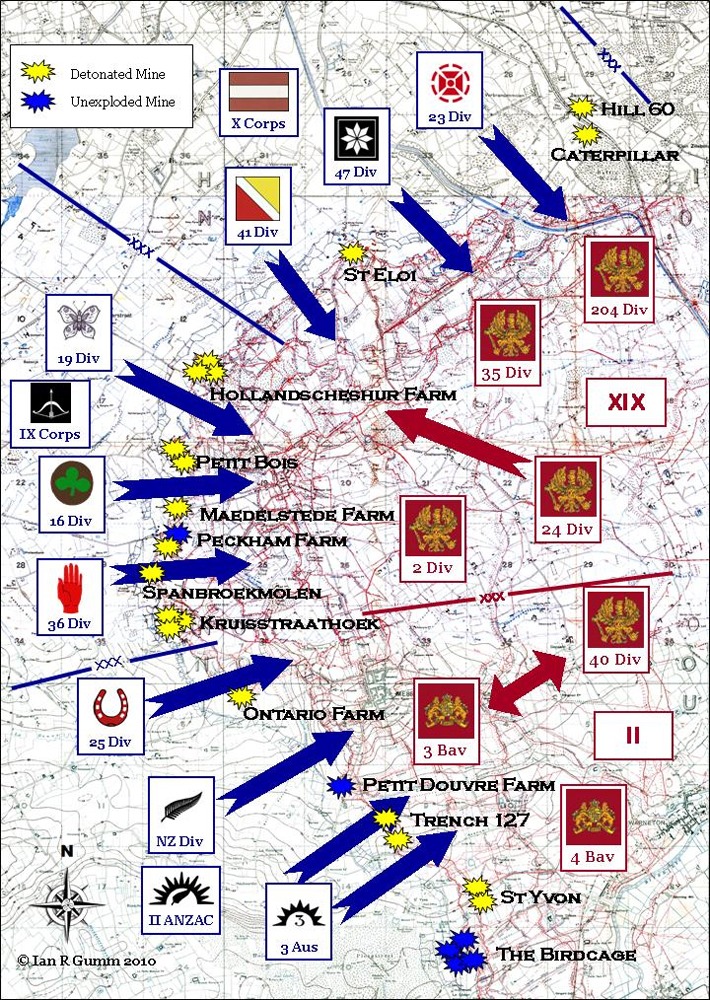
One of the most remarkable aspects of the battle was the extensive mining operation carried out by British tunnelling companies. For more than a year before the attack, British engineers secretly dug deep tunnels beneath German positions and placed enormous charges of explosives underneath key points on the ridge. In total, nineteen mines were prepared, containing over 450 tons of ammonal explosive. The work was extremely dangerous, as German tunnellers were also digging underground and counter-mining in an attempt to detect and destroy Allied tunnels. Despite these risks, the British completed the operation in secrecy.
At 3:10 a.m. on 7 June 1917, the mines were detonated simultaneously. The explosions were among the largest man-made blasts in history up to that point and could reportedly be heard as far away as London. Thousands of German soldiers were killed instantly, and huge craters destroyed entire sections of the German front line. The shock and confusion caused by the explosions gave the British infantry a major advantage as they advanced behind a creeping artillery barrage.
The detonation of the mines was not only a tactical success but also a psychological weapon. The scale of destruction was unprecedented and deeply shocked German defenders. Survivors were often disoriented and unable to organise resistance. This demonstrated the growing role of psychological warfare in modern conflict, where surprise and morale could be as important as physical force. For British troops, the explosions boosted confidence and created momentum for the attack.
Another reason the Battle of Messines was important was the highly effective use of artillery. British gunners had spent weeks registering targets and preparing detailed fire plans. During the battle, they used a creeping barrage, in which artillery shells fell just ahead of advancing infantry. This forced German defenders to remain under cover while allowing British troops to move forward with protection. The timing had to be exact, requiring excellent communication and discipline. The success of this tactic at Messines showed how artillery could support infantry effectively when properly coordinated.
The infantry assault itself was equally well organised. British, Australian, New Zealand, and Irish divisions participated in the attack, moving forward in carefully timed waves. Objectives were realistic and limited, unlike earlier offensives that had demanded overly ambitious advances. Troops were instructed to consolidate captured ground rather than push forward recklessly. This reflected an important shift in British tactics towards “bite and hold” operations, where smaller gains were secured before advancing further. The success of this approach at Messines influenced later Allied tactics.
The battle was also important because it was one of the clearest examples of combined arms warfare during the First World War. Infantry, artillery, engineers, aircraft, and logistics units all worked together as part of a coordinated plan. Aircraft provided reconnaissance and reported German movements, helping artillery target enemy positions accurately. Engineers repaired roads and communication lines to support advancing troops. This integration of different military branches foreshadowed modern warfare, where success depends on cooperation between specialised forces.
Strategically, the capture of Messines Ridge improved the British position around Ypres and removed the German observation advantage in that sector. This was intended to prepare the way for the Third Battle of Ypres, also known as Passchendaele, which began later in July 1917. While Passchendaele would become infamous for mud, suffering, and limited gains, Messines demonstrated what could be achieved through careful preparation and realistic planning. It represented the high point of British tactical effectiveness before the difficulties of the later campaign.
The battle also had an important impact on morale. For the British Army, Messines was a badly needed victory after the costly struggles of earlier years. It showed that German defences could be broken without catastrophic losses if attacks were properly planned. This improved confidence among soldiers and commanders alike. Prime Minister David Lloyd George praised the success, seeing it as proof that Allied armies were becoming more effective.
For Germany, the defeat was troubling because it exposed weaknesses in their defensive system. Although German forces had developed strong trench defences, they were vulnerable to deep mining and overwhelming artillery when surprised. The loss of the ridge forced German commanders to reconsider their defensive arrangements and contributed to a growing sense that the balance of power on the Western Front was shifting.
The battle also highlighted the increasing professionalism of the British Army. In 1914, Britain had entered the war with a relatively small professional force. By 1917, after years of expansion and painful experience, the British Expeditionary Force had become a highly skilled and technologically advanced army. Messines reflected this transformation. The planning, engineering, artillery coordination, and disciplined infantry performance all showed how far the army had developed.
However, the importance of Messines should not be exaggerated. While it was a clear tactical success, it did not lead directly to a decisive breakthrough. The Western Front remained locked in trench warfare, and the later Passchendaele offensive failed to achieve the hoped-for strategic results. Some historians argue that the success at Messines may even have encouraged overconfidence, contributing to the decision to launch the more costly Ypres offensive. Nevertheless, this does not diminish the battle’s significance as a model of effective planning and execution.
The human cost of the battle also reminds us of the realities of First World War warfare. Although British casualties were relatively low compared to battles like the Somme, they still numbered around 25,000, while German losses were approximately 25,000 as well, including many killed in the mine explosions. These figures show that even successful operations involved immense sacrifice. The battle demonstrated that technological and tactical progress could reduce losses but not eliminate the brutal nature of industrial warfare.
Historians continue to study Messines because it offers valuable lessons about leadership and military adaptation. Plumer’s emphasis on preparation, realism, and coordination contrasts sharply with more reckless offensives of the period. His methods influenced later Allied successes in 1918, when coordinated attacks finally broke German resistance. Messines therefore represents an important step in the learning process that eventually allowed the Allies to win the war.
In memory and commemoration, the Battle of Messines remains significant for the nations involved, particularly Britain, Australia, and New Zealand, whose troops played major roles in the assault. The mine craters, cemeteries, and memorials around Messines Ridge serve as reminders of both the ingenuity and destruction of the First World War. They symbolise a battle where planning and innovation achieved success, but only at great human cost.
In conclusion, the Battle of Messines on 7 June 1917 was important because it marked one of the most successful Allied offensives of the First World War. It demonstrated the effectiveness of careful planning, engineering innovation, artillery coordination, and realistic objectives. It improved British tactical and strategic positions, boosted Allied morale, and highlighted the increasing professionalism of the British Army. Although it did not end trench warfare or lead to immediate decisive victory, it provided a model for future operations and showed how armies could adapt to the challenges of modern industrial conflict. For these reasons, the Battle of Messines remains one of the most significant and instructive battles of the First World War.