Was the Attrition of the 1916 Somme Offensive Worth It?
The Battle of the Somme, fought between 1 July and 18 November 1916, remains one of the most controversial campaigns of the First World War. Planned jointly by Britain and France, the offensive aimed to break through German defensive lines, relieve pressure on the French forces fighting at Verdun, and ultimately achieve a decisive victory on the Western Front. Instead, the battle became synonymous with attrition, characterised by enormous casualties for relatively limited territorial gains. By the end of the campaign, the British Empire had suffered approximately 420,000 casualties, the French around 200,000, and the Germans an estimated 430,000 to 500,000. Whether this extraordinary human cost was justified has been debated by historians for more than a century. Although the Somme failed to achieve its original objective of a decisive breakthrough, its strategic impact, the relief it provided to Verdun, and the military lessons it generated suggest that the attrition, while tragic, contributed significantly to the eventual Allied victory.
One of the strongest arguments in favour of the Somme is that it fulfilled an important strategic purpose by easing German pressure on Verdun. When planning began in late 1915, the Somme was intended as a joint Anglo-French offensive. However, Germany’s attack on Verdun in February 1916 forced France to divert much of its army to defending that fortress. Consequently, Britain assumed the leading role in the Somme offensive. Once the battle began on 1 July, Germany had little choice but to transfer divisions away from Verdun to reinforce its threatened positions along the Somme. This reduced the intensity of the German assault on the French, allowing Verdun to hold. Had the Somme not taken place, Germany may have concentrated sufficient resources to capture Verdun, potentially causing a catastrophic blow to French morale and military capability. Therefore, although the Somme did not achieve a breakthrough, it succeeded in supporting Britain’s principal ally at a critical moment.
Furthermore, the battle inflicted severe losses upon the German Army, weakening its ability to sustain the war. Although casualty estimates vary, German losses were broadly comparable to those suffered by the Allies. Unlike Britain, Germany possessed fewer reserves and faced increasing difficulties replacing experienced soldiers and officers. Historian Gary Sheffield argues that by late 1916 Germany had been forced onto the strategic defensive, a trend accelerated by the losses suffered during the Somme. German commanders such as General Erich Ludendorff later admitted that the campaign imposed immense strain upon their forces. While Britain could increasingly draw upon manpower from across the Empire and benefit from expanding industrial production, Germany faced mounting shortages caused by the Allied naval blockade. In this sense, attrition arguably favoured the Allies over the long term.
The Somme also transformed the British Army into a far more effective fighting force. In 1914, Britain’s army had been relatively small and professional. By 1916, it consisted largely of volunteers from Lord Kitchener’s New Army, many of whom had little combat experience. The opening day demonstrated this in devastating fashion, with nearly 57,000 British casualties, including over 19,000 deaths, making it the bloodiest day in British military history. However, throughout the campaign, British commanders gradually adapted their tactics. Improvements included closer coordination between infantry and artillery, the increasing use of creeping barrages, better communication methods, and greater reliance on aircraft for reconnaissance. The battle also witnessed the first battlefield use of tanks in September 1916. Although these early machines were unreliable, they represented a significant technological innovation that foreshadowed future developments in warfare. Many of the tactical lessons learned on the Somme contributed to the more successful Allied offensives of 1917 and 1918.
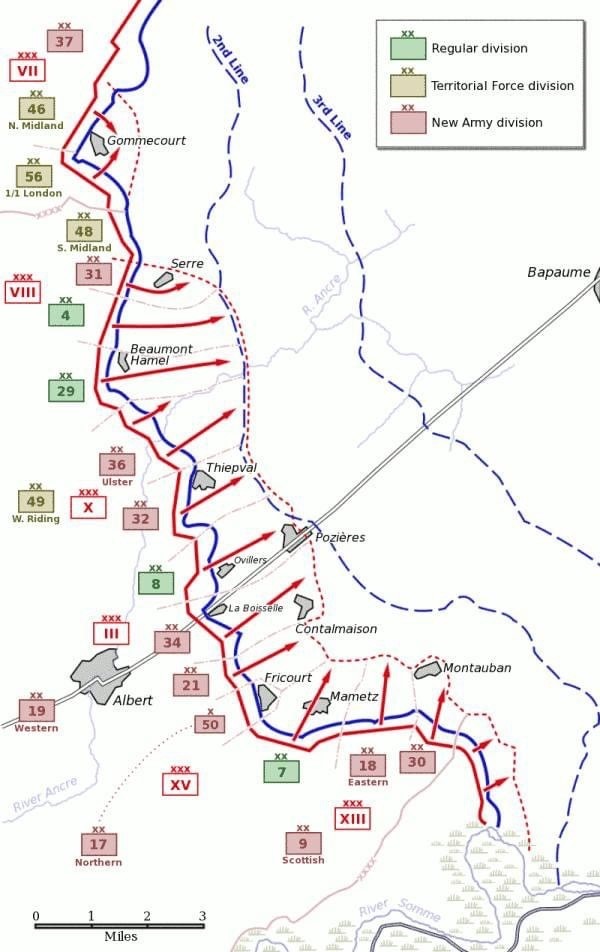
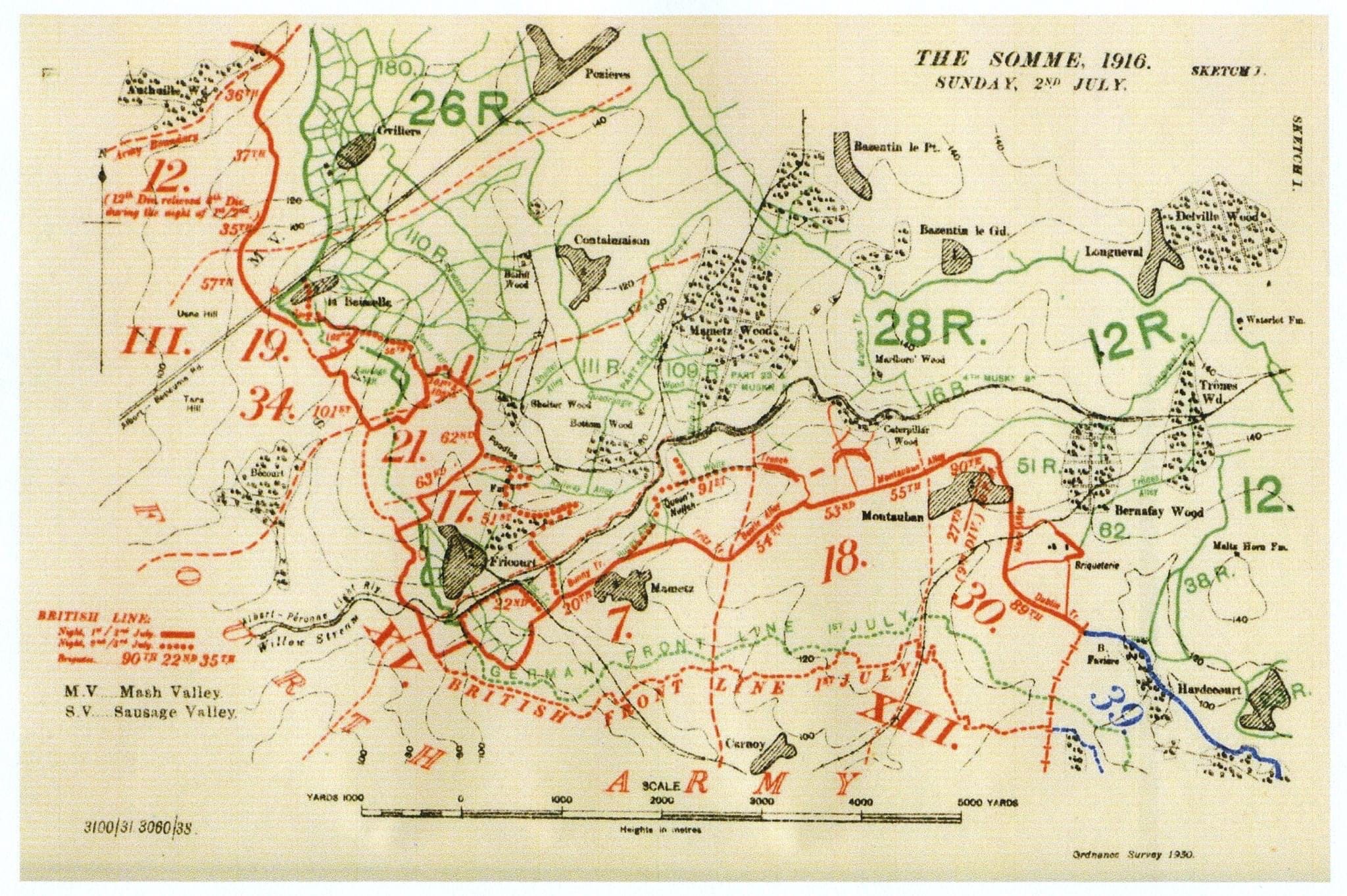
However, there are compelling arguments that the attrition of the Somme was not worth its immense cost. The offensive failed in its primary objective of achieving a decisive breakthrough. Despite months of fighting and enormous casualties, Allied forces advanced only around six to eight miles at their furthest point. German defensive systems largely remained intact, and the Western Front continued to be characterised by trench warfare. Critics argue that such limited territorial gains could never justify the loss of more than one million casualties on both sides. To many contemporaries, the battle appeared to symbolise futile slaughter rather than meaningful progress.
Criticism has also focused on the leadership of General Sir Douglas Haig, commander of the British Expeditionary Force. Haig believed that sustained offensives would eventually wear down German resistance and create opportunities for cavalry exploitation once a breakthrough occurred. Many historians, particularly those writing in the decades after the war, portrayed him as overly optimistic and insufficiently responsive to changing battlefield conditions. The preliminary artillery bombardment, lasting seven days, failed to destroy German deep dugouts or cut much of the barbed wire protecting enemy positions. Consequently, when British infantry advanced at walking pace on 1 July, they encountered devastating machine-gun fire. Critics argue that commanders underestimated German defences and overestimated the effectiveness of artillery, leading to avoidable losses.
Moreover, the human consequences of the Somme were profound. Entire communities across Britain suffered devastating losses because many battalions were recruited from single towns through the “Pals Battalions” scheme. When these units attacked together, entire neighbourhoods lost large numbers of young men in a single day. The psychological trauma experienced by survivors, together with the widespread grief felt across Britain and the Empire, left lasting social scars. For many families, the battle became a symbol of needless sacrifice, influencing public perceptions of the First World War for generations.
Nevertheless, recent historical interpretations have challenged the traditional view that the Somme was simply a pointless massacre. Historians such as Gary Sheffield and William Philpott argue that the battle should be understood within the realities of industrial warfare. By 1916, neither side possessed the technology or tactical methods necessary to achieve rapid breakthroughs against entrenched positions defended by machine guns, barbed wire, and heavy artillery. Attrition therefore became an unavoidable feature of warfare rather than merely a consequence of poor leadership. From this perspective, Haig’s strategy reflected the military realities of the time rather than personal incompetence. Although costly, the battle gradually exhausted Germany’s military resources while improving Allied operational capabilities.
In conclusion, whether the attrition of the Somme was worth it depends largely upon the criteria used to judge success. If measured solely by immediate territorial gains and casualty figures, the offensive appears to have been a devastating failure. The enormous human cost, particularly on the first day, continues to symbolise the horrors of industrial warfare. However, when viewed within the broader strategic context of the First World War, the battle achieved several important objectives. It relieved pressure on Verdun, inflicted heavy losses on the German Army, accelerated Britain’s military development, and contributed to the gradual erosion of Germany’s ability to continue the war. While the suffering endured by those who fought can never be justified lightly, the Somme played a significant role in creating the conditions that enabled Allied victory in 1918. Therefore, although the price paid was extraordinarily high, there is a strong argument that the attritional nature of the Somme ultimately served an essential strategic purpose.