The story of the Sardinian Grenadiers on Monte Cengio is one of the most dramatic episodes of the First World War on the Italian Front. Fought in the spring of 1916, during the Austro-Hungarian offensive known as the Strafexpedition, the battle saw Italian troops defend a rugged mountain position on the Asiago plateau against a determined enemy advance. Among the defenders were the Granatieri di Sardegna — the Grenadiers of Sardinia — an elite Italian infantry formation whose actions on Monte Cengio became closely associated with sacrifice, endurance and the defence of the Italian homeland.
Monte Cengio was not a vast mountain by Alpine standards, but its geographical position made it strategically important. Its steep slopes, narrow ridges and rocky approaches created a natural defensive obstacle, while its proximity to the Asiago plateau and the approaches towards the Venetian plain gave it considerable military significance. In May and June 1916, this isolated mountain became the setting for desperate fighting at close quarters, as Italian soldiers attempted to prevent Austro-Hungarian forces from breaking through the Italian lines.
To understand the fighting on Monte Cengio, it is necessary to consider the wider military situation in 1916. Italy had entered the war against Austria-Hungary in May 1915, opening a new front across the mountainous borderlands of northeastern Italy. The terrain presented enormous challenges to both armies. Soldiers fought among rocky peaks, deep valleys and narrow mountain passes, where a small force occupying commanding ground could obstruct a much larger enemy formation.
In May 1916, the Austro-Hungarian army launched a major offensive from the Trentino region, hoping to break through the Italian defences, advance towards the Venetian plain and threaten the Italian forces fighting farther east along the Isonzo River. Known as the Strafexpedition, the offensive initially achieved significant gains and placed the Italian positions on the Asiago plateau under severe pressure. Monte Cengio became one of the final important defensive positions covering the approaches towards the plain.
The Italian high command urgently transferred the Grenadiers of Sardinia from the eastern front to reinforce the threatened sector. Commanded by Brigadier General Giuseppe Pennella, the brigade arrived in the area around 22 May
1916 and began strengthening its defensive positions. Its soldiers were soon subjected to intense artillery bombardments and repeated infantry assaults.
The Battle: 29 May–3 June 1916
The decisive fighting developed during the final days of May. The Austro-Hungarian advance placed increasing pressure on the Italian defensive line, and the grenadiers found themselves fighting against determined attacks along difficult and exposed ground.
Monte Cengio’s slopes made movement and resupply exceptionally dangerous. The defenders occupied positions among rocks, trenches and improvised fortifications, with little protection from the full force of enemy artillery. Communication between units was difficult, and reinforcements could not always reach threatened positions quickly enough.
The fighting intensified on 30 and 31 May, as Austro-Hungarian infantry attempted to break through the grenadiers’ line. Italian soldiers repeatedly resisted attacks while trying to maintain their positions and prevent the enemy from advancing towards the Venetian plain.
As the battle continued, the defenders suffered mounting casualties. Officers were killed or wounded, and responsibility for leading men increasingly fell to junior officers, non-commissioned officers and ordinary soldiers. The Italian Army’s historical account of the campaign describes how surviving grenadiers continued to launch fierce counterattacks despite the deteriorating situation.
By early June, the situation on Monte Cengio had become critical. Ammunition and supplies were running short, casualties had severely weakened the defending formations, and Austro-Hungarian troops threatened to envelop portions of the Italian line.
On 3 June, enemy forces broke through and surrounded Italian units in neighbouring sectors. Some battalions were compelled to surrender, while other grenadiers continued resisting around Monte Cengio itself. The defenders were increasingly isolated, and the prospect of holding the position indefinitely had become remote.
The most famous story associated with the battle concerns a rocky outcrop now known as the Salto del Granatiere, or Grenadier’s Leap.
According to the traditional account, some Italian grenadiers defending the precipice ran out of ammunition as Austro-Hungarian soldiers pressed their attack. With retreat cut off and the enemy closing in, the struggle allegedly descended into hand-to-hand combat. In the best-known version of the story, grenadiers grappled with their attackers and plunged over the cliff with them rather than surrender.
The episode became one of the enduring legends of the Italian Front, symbolising the desperation of soldiers trapped between an advancing enemy and a sheer drop. The name Salto del Granatiere preserves the memory of this extraordinary story.
However, the legend should be distinguished from what can be established with certainty. The exact circumstances and scale of the reported leaps are difficult to verify independently. The wider historical record firmly establishes the ferocity of the fighting, the isolation of Italian positions and the catastrophic losses suffered by the grenadiers. The dramatic details of individual soldiers deliberately taking their enemies over the precipice belong to the traditional narrative of the battle and should be treated with appropriate caution.
The documented history is compelling without embellishment: exhausted soldiers continued resisting in a position where ammunition, reinforcements and the possibility of escape were increasingly limited.
Among the men remembered in connection with the defence of Monte Cengio was Second Lieutenant Carlo Stuparich. Born in Trieste, then part of Austria-Hungary, he was an Italian patriot who volunteered to fight for Italy. His story reflects the complicated national loyalties and personal sacrifices that shaped the war in the region.
Stuparich died on 3 June 1916. According to the Italian Army’s commemorative account, he took his own life rather than be captured by the Austro-Hungarian forces. He was posthumously awarded the Gold Medal for Military Valour, one of Italy’s highest military decorations.
His fate was one among thousands of individual tragedies on the Asiago plateau. The Grenadiers of Sardinia brigade suffered approximately 4,600 casualties from around 6,000 men deployed during the fighting in the Monte Cengio–Monte Lemerle sector. This figure encompasses killed, wounded and missing personnel, rather than deaths alone. By 7 June, the surviving grenadiers had been relieved and their depleted ranks consolidated.
The Legacy of Monte Cengio
The Austro-Hungarian offensive eventually lost its momentum. The Russian Brusilov Offensive, launched in June 1916, forced Austria-Hungary to divert troops towards the Eastern Front, contributing to the end of the offensive in Italy. Monte Cengio had witnessed some of the fiercest resistance during the campaign, and the grenadiers’ defence helped prevent the enemy from achieving its wider objective of breaking through towards the Venetian plain.
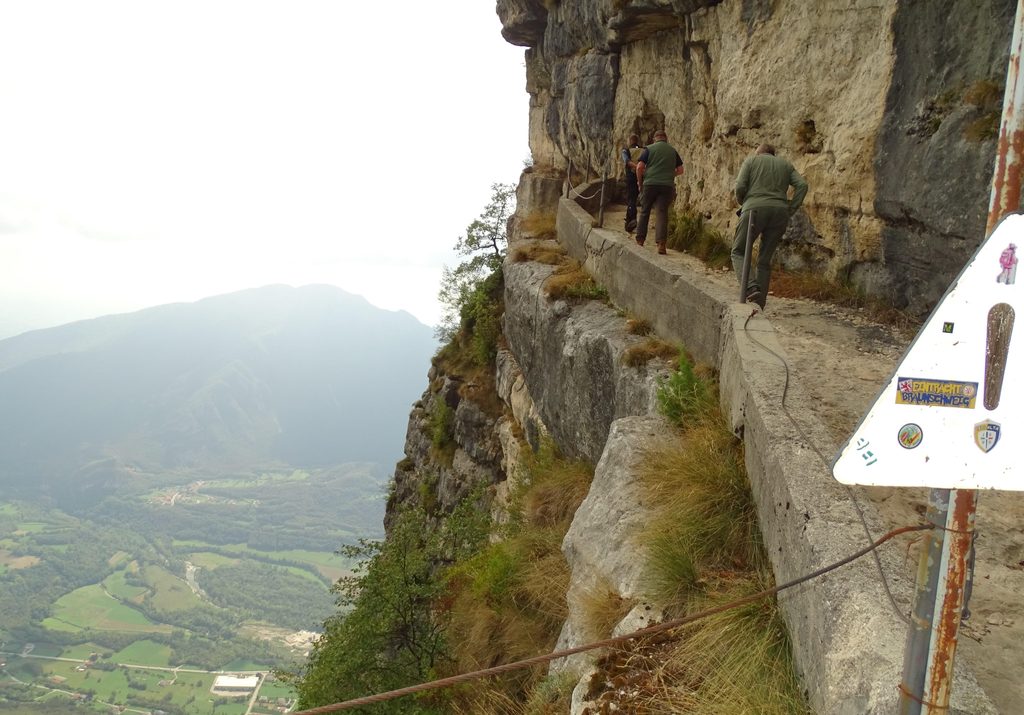
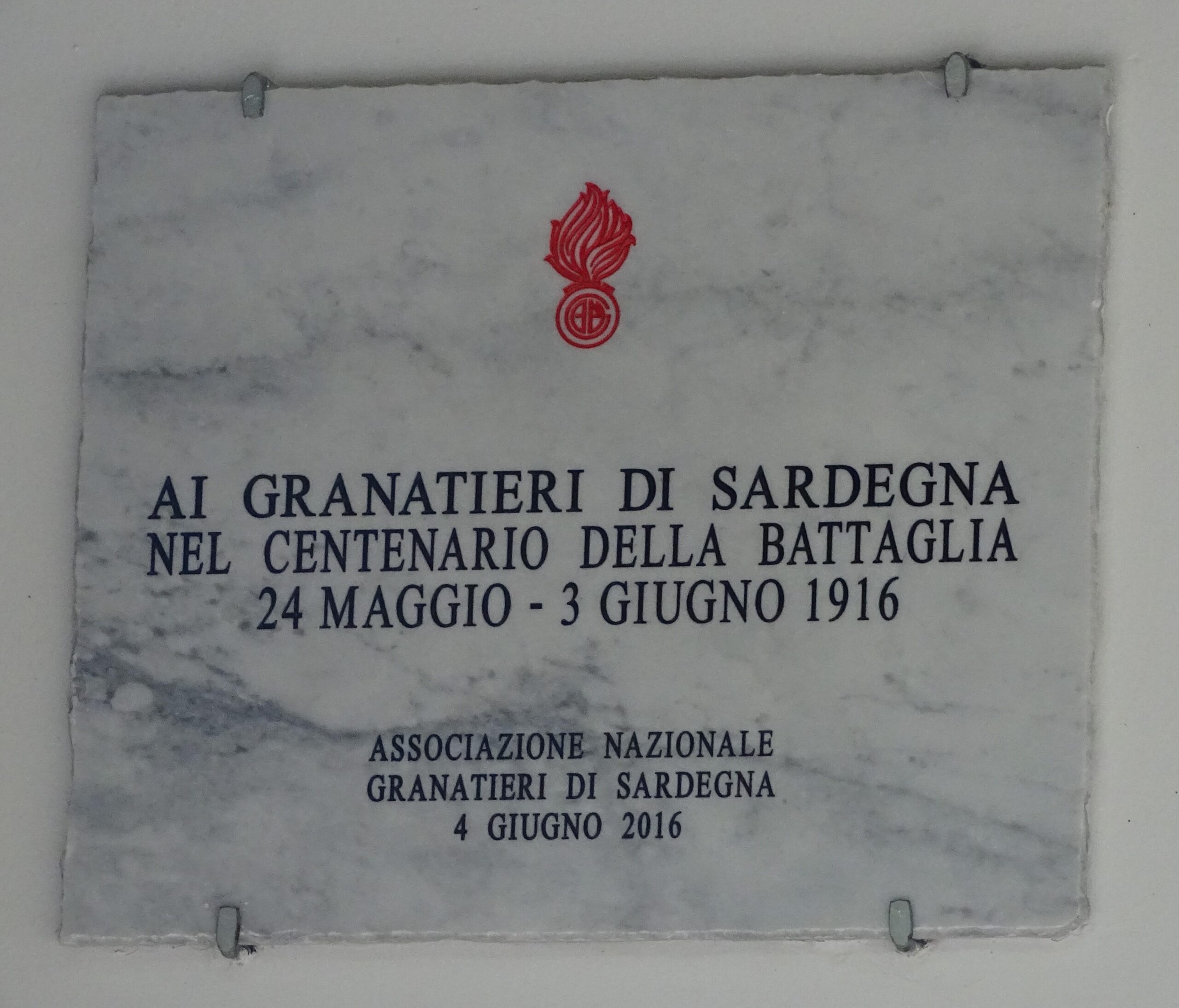
Today, Monte Cengio remains a place of remembrance. Visitors can explore military paths, tunnels, defensive positions and routes cut into the mountainside. A memorial chapel commemorates the grenadiers who fought and died there, while monuments preserve the memory of the soldiers whose lives were lost during the battle. The mountain was formally designated a place sacred to the Italian nation in 1967.
The story of the Sardinian Grenadiers on Monte Cengio is not simply a tale of military heroism. It is also a reminder of the terrible cost of mountain warfare, where strategic necessity placed ordinary soldiers in extraordinary danger. Their defence unfolded amid bombardment, shortages, isolation and overwhelming casualties.
More than a century later, the cliffs of Monte Cengio still bear the physical traces of the conflict. Its tunnels and narrow paths offer a tangible connection to the men who fought there in 1916. The Grenadier’s Leap remains a powerful symbol of their ordeal, although the legend must be understood alongside the documented events.
Ultimately, the historical significance of Monte Cengio lies in both the strategic role it played during the Strafexpedition and the human endurance demanded of its defenders. The Grenadiers of Sardinia suffered devastating losses, yet their stand became an enduring part of Italy’s First World War memory — a testament to the courage, suffering and sacrifice of soldiers caught in one of the most desperate battles of the mountain front.