The Austro-Hungarian Fortifications on the Italian Border in the 19th Century: Fort Kluze and Fort Belvedere
Introduction
The Austro-Hungarian fortifications constructed along the Italian frontier during the nineteenth century represent one of the most fascinating chapters in European military architecture. Built amid rising nationalism, territorial rivalry and the gradual transformation of warfare, these forts were intended to protect the southern approaches to the Habsburg Empire, particularly the strategically important Alpine passes connecting the Italian peninsula with the Austrian-controlled territories of Tyrol and Trentino.
Although many of the best-known fortifications in this region were completed in the late nineteenth and early twentieth centuries, their origins lay in earlier defensive systems developed during the Napoleonic era and subsequently adapted to meet the challenges of modern artillery. Among the notable examples are Fort Kluge and Fort Belvedere, both associated with the fortified landscape of the Trentino region in northern Italy. Their history illustrates the changing relationship between geography, military technology and imperial strategy in the decades preceding the First World War.
The strategic importance of the Italian frontier
During much of the nineteenth century, the Habsburg Monarchy controlled extensive territories south of the Alps, including Lombardy-Venetia until the wars of Italian unification, as well as Tyrol and Trentino. These lands were essential to the empire’s military security because the Alpine valleys provided routes through which an invading army might advance towards the heart of Austrian territory.
The emergence of a unified The emergence of a unified Italian state transformed this strategic situation. The Kingdom of Italy was proclaimed in 1861, and the acquisition of Venetia in 1866 brought the Italian frontier closer to the Habsburg lands of Trentino. Following the loss of Lombardy in 1859 and Venetia in 1866, Austria-Hungary increasingly regarded the mountainous frontier as a potential invasion route that required permanent defence.
The Alpine landscape offered both advantages and disadvantages. Steep mountains, narrow valleys and limited roads made the movement of large armies difficult. However, these same valleys created predictable avenues of approach that could be blocked by artillery positions and fortified strongpoints. A comparatively small garrison, supported by well-positioned guns, could delay a much larger attacking force.
The Habsburg military authorities therefore developed interconnected defensive systems rather than relying exclusively on isolated fortresses. Roads, mountain passes, observation posts, artillery batteries and permanent forts were designed to work together, enabling defenders to obstruct enemy movement and concentrate fire upon vulnerable approaches.
The first generation of forts: 1830s–1860s
The earliest major nineteenth-century fortifications were built to control important Alpine routes. Franzensfeste, now known as Fortezza, was constructed between 1833 and 1838 to defend the approaches to the Brenner Pass. The Nauders roadblock followed between 1838 and 1840, protecting the Reschen Pass. These installations reflected the military priorities of an empire concerned with preserving communications between its northern and southern territories.
Following the Italian victories of 1859 and 1866, the Habsburg authorities had to reconsider their defences. The loss of Lombardy and Venetia meant that many older fortifications had become less useful, while the remaining imperial territory was increasingly exposed along its southern frontier.
The forts constructed during this period generally relied on thick masonry walls, enclosed gun positions and substantial defensive structures. They were designed to resist the artillery of their day, but the introduction of more powerful rifled guns and improved explosive shells rapidly undermined their effectiveness. By the later nineteenth century, military engineers were therefore experimenting with stronger materials, lower profiles and more dispersed arrangements.
The development of modern Alpine fortifications
From the 1870s onwards, Austro-Hungarian military engineers developed a more coordinated defensive network across Trentino. Fortified roadblocks at Civezzano, constructed between 1869 and 1872, helped protect the approaches to Trento through the Valsugana valley. During the following decade, the defences around Trento were strengthened with additional works and artillery positions.
By the 1880s, concrete construction and improved armoured gun positions were becoming increasingly important. Fortifications were designed not merely to house artillery but to resist bombardment while maintaining the ability to deliver effective counterfire. Their positions were selected to exploit natural ridges, cliffs and narrow valleys.
The most significant transformation came in the years immediately preceding the First World War. Advances in heavy artillery made traditional forts vulnerable, encouraging engineers to build structures with thick reinforced-concrete roofs, armoured turrets and underground communications. Rather than presenting a single conspicuous target, modern forts dispersed their defensive elements across the landscape.
The fortified zone around Folgaria, Lavarone and Luserna became one of the most impressive examples of this approach. Seven major works were constructed between 1908 and 1914, forming a mutually supporting defensive system. These included Fort Belvedere, Fort Luserna, Fort Verle, Fort Cherle and Fort Sommo Alto.
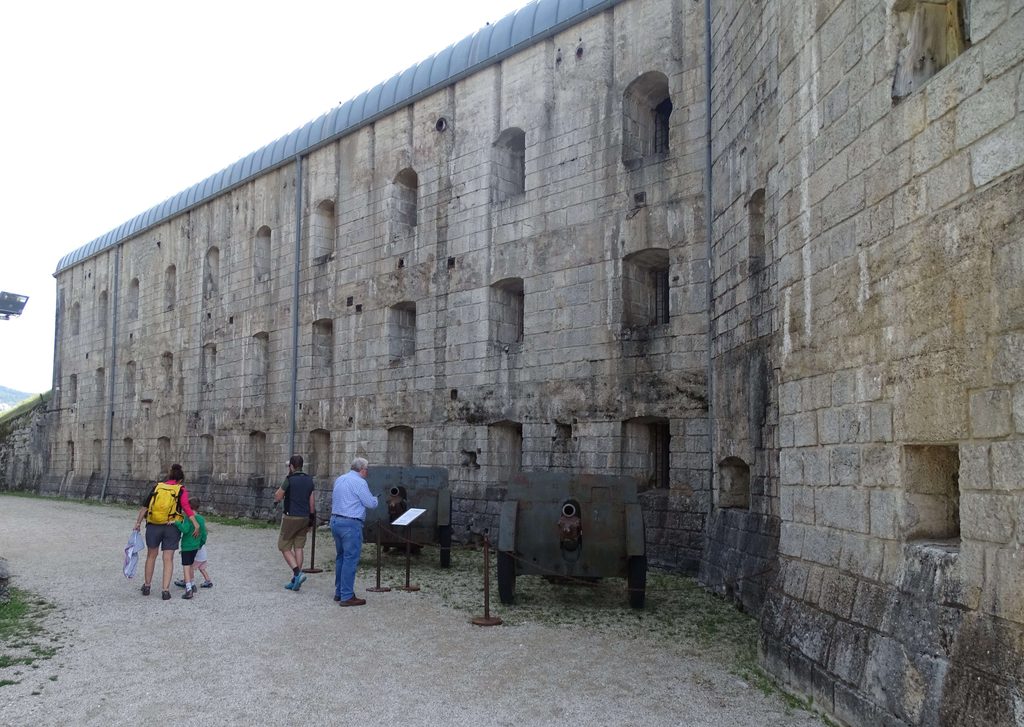
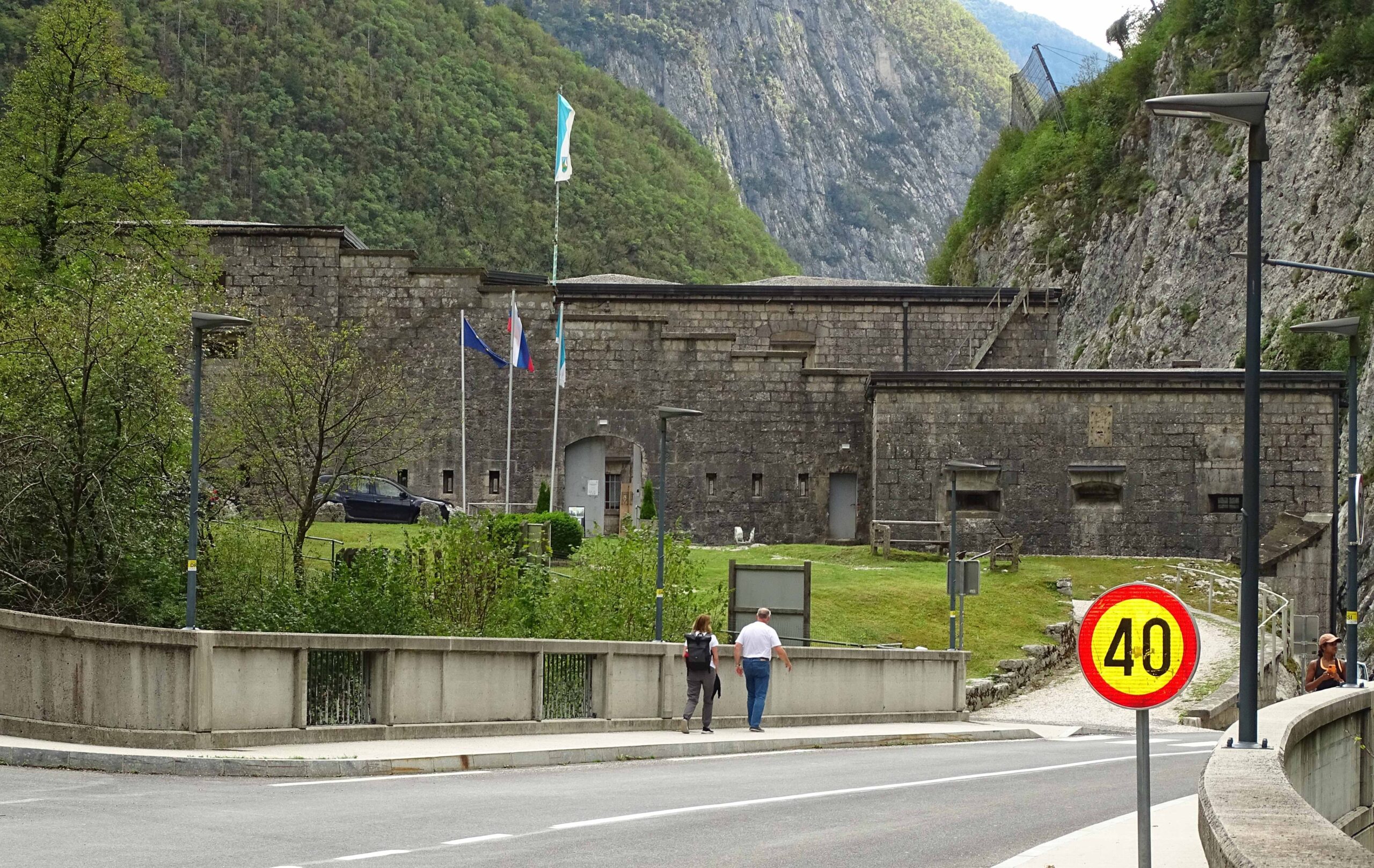
The Kluže complex occupies a strategically important position above the Koritnica gorge, controlling a route through the Julian Alps. Its history extends back well before the nineteenth century, with successive defensive structures protecting the passage. The fortress visible today is principally associated with its later rebuilding in the nineteenth century, when the Habsburg authorities strengthened their control over the approaches to the Predil Pass and the wider frontier region.
Its geographical setting demonstrates the fundamental logic of Alpine fortification. The gorge constricted the movement of troops and transport, while the surrounding heights provided commanding positions from which an advancing force could be observed and engaged. A fortress at such a location could delay an invasion and disrupt supply lines without requiring the enormous garrison needed for a major field army.
Kluže should therefore be understood within the broader history of Habsburg frontier defence, although it should not be confused with Fort Belvedere or automatically treated as part of the same local defensive group. The distinction matters because the Austro-Hungarian frontier extended across a wide and varied mountainous region, encompassing numerous forts, roadblocks and fortified passes.
Fort Belvedere: a masterpiece of military engineering
Fort Belvedere, officially known as Werk Gschwent, is one of the finest surviving examples of Austro-Hungarian military engineering in Trentino. Situated near Lavarone at approximately 1,177 metres above sea level, it overlooks the Astico valley, an important potential route of attack from Italian territory.
Designed by military engineer Rudolf Schneider and constructed between 1908 and 1912, the fort represented a considerable advance over the masonry fortifications of earlier decades. Its principal structures were integrated into the limestone landscape, with accommodation blocks, service areas, artillery positions and defensive outposts connected through protected passages.
The fort’s armament included three armoured revolving turrets intended for 10-centimetre guns. Machine-gun positions and a defensive ditch protected against infantry attacks, while its thick concrete and steel construction was designed to withstand prolonged artillery bombardment. It also possessed water supplies, electrical facilities, telephone communications, medical provisions and extensive stores, allowing its garrison to operate with a significant degree of independence.
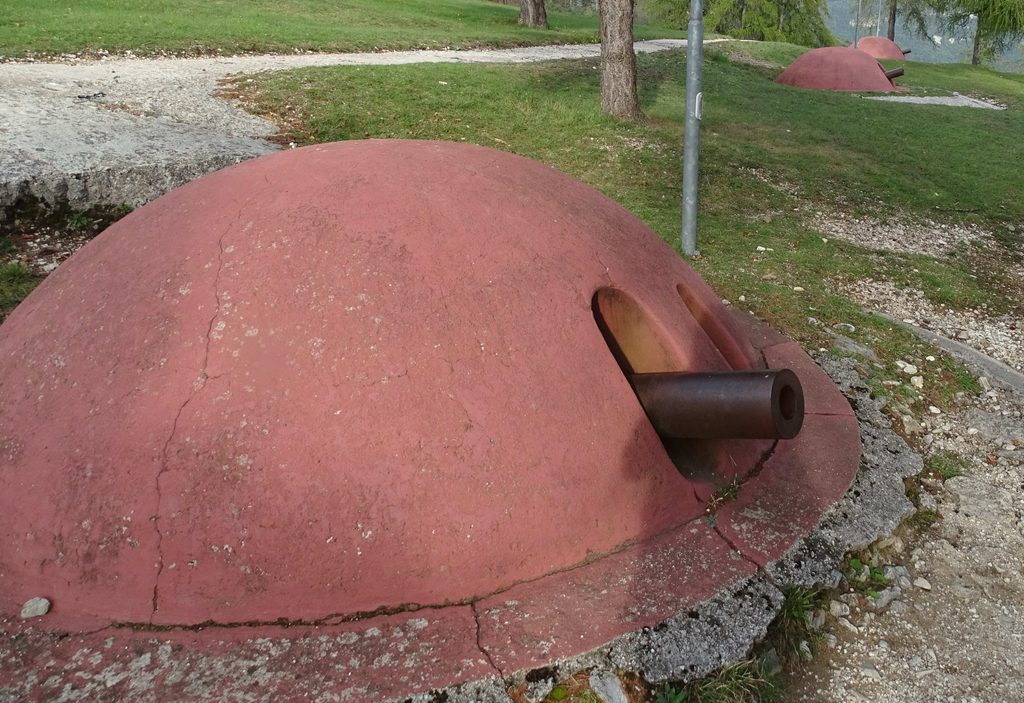
These features reveal how far military engineering had advanced since the first half of the nineteenth century. Fort Belvedere was not simply a stone building containing cannons; it was a carefully planned defensive installation in which protection, communications, logistics and firepower were integrated.
Its importance became evident in May 1915, when Italy entered the First World War against Austria-Hungary. Fort Belvedere came under heavy bombardment, suffering damage and casualties, but its commanding position helped it avoid a direct Italian infantry assault. The surrounding fortified zone played a significant role in resisting Italian attempts to penetrate the imperial defences.
Conclusion
The Austro-Hungarian forts along the Italian frontier illustrate the evolution of European military architecture from massive nineteenth-century masonry structures to sophisticated reinforced-concrete installations. Their development was driven by political upheaval, changing borders and the relentless progress of artillery technology.
Fort Kluže exemplifies the enduring strategic importance of controlling Alpine passes and narrow valleys, while Fort Belvedere demonstrates the technological sophistication achieved immediately before the First World War. Together, they help explain how the Habsburg Empire attempted to defend its southern frontier through a combination of geography, engineering and coordinated military planning.
Today, surviving fortifications such as Fort Belvedere serve not only as monuments to military ingenuity but also as places of historical reflection. Their walls and underground passages preserve evidence of an era in which the mountains of Trentino became a heavily fortified frontier, and in which the political tensions of nineteenth-century Europe ultimately culminated in the devastating Alpine campaigns of 1915-18.