
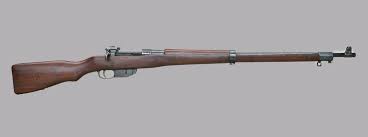
..has a controversial place in the history of World War I. Celebrated before the war as a symbol of Canadian industrial independence, it became, under the brutal conditions of trench warfare, a lightning rod for criticism, political conflict, and ultimately reform within Canada’s military establishment. Its replacement by the Lee Enfield was not merely a technical decision but one with profound political consequences, exposing tensions between nationalism, practicality, and military professionalism.
The Ross rifle was developed by Sir Charles Ross, a Scottish aristocrat and inventor, and adopted by Canada in the early 20th century. At the time, Canada sought to assert greater autonomy within the British Empire, and adopting a domestically produced rifle was seen as a step toward that goal. The Ross was highly accurate, especially in target shooting, and performed well under controlled conditions. It became popular among marksmen and was even used in competitive shooting events. On paper, it appeared superior to the British Lee-Enfield in precision.
However, the realities of modern industrial warfare quickly revealed the rifle’s shortcomings. When Canadian troops arrived on the Western Front in 1915, they encountered an environment vastly different from the clean ranges where the Ross had excelled. Mud, rain, and constant firing created conditions that exposed critical flaws in the weapon’s design. The Ross rifle’s straight-pull bolt action was particularly susceptible to jamming when dirt or debris entered the mechanism. Soldiers often found themselves unable to cycle the rifle after only a few shots, a potentially fatal problem in combat.
Another serious issue was the rifle’s tight tolerances. While this contributed to its accuracy, it made the weapon less forgiving under battlefield conditions. Ammunition manufactured in Britain sometimes did not fit properly in the Ross chamber, leading to extraction problems. In extreme cases, soldiers had to kick the bolt open or abandon their rifles entirely. There were even reports—though sometimes exaggerated—of the rifle being incorrectly reassembled in a way that could cause it to fire backward, posing a danger to the user.
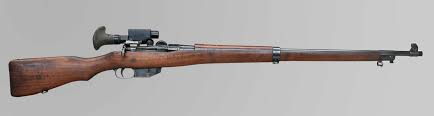
The Ross set up as a sniper rifle.
The consequences of these flaws became evident during major engagements such as the Second Battle of Ypres in 1915. Canadian troops, facing German attacks including the first large-scale use of poison gas, struggled not only against the enemy but also with their own equipment. Many soldiers discarded their Ross rifles in favor of Lee-Enfields picked up from fallen British troops. This was a damning indictment: in the chaos of battle, reliability mattered far more than theoretical accuracy.
The persistence of the Ross rifle despite mounting evidence of its inadequacy was largely due to political factors. The most prominent defender of the rifle was Sam Hughes, Canada’s Minister of Militia and Defence. Hughes was a strong nationalist who championed the Ross as a symbol of Canadian ingenuity and independence. He had personally backed its adoption and was deeply invested in its success. Critics of the rifle often found themselves at odds not just with a piece of equipment, but with Hughes himself.
Hughes’s management style exacerbated the situation. He was known for his micromanagement and resistance to professional military advice. Reports from the front highlighting the rifle’s deficiencies were often dismissed or downplayed. Officers who criticized the Ross risked career repercussions, creating a climate in which honest feedback was stifled. This tension between political authority and military expertise became one of the defining issues of Canada’s wartime administration.
As the war progressed, pressure to replace the Ross rifle grew impossible to ignore. Senior officers, including those with direct battlefield experience, argued forcefully for the adoption of the Lee-Enfield. Unlike the Ross, the Lee-Enfield was designed with combat conditions in mind. Its bolt-action mechanism was more robust and tolerant of dirt and fouling, and it could be fired rapidly with a high degree of reliability. British forces had already proven its effectiveness, and Canadian troops were increasingly demanding the same standard equipment.
By 1916, the situation reached a turning point. Mounting casualties, combined with persistent reports of equipment failure, forced the Canadian government to act. The decision was made to withdraw the Ross rifle from frontline service and replace it with the Lee-Enfield. This transition marked a significant shift, prioritizing battlefield effectiveness over ազգային symbolism.
The political fallout from this decision was substantial. For Sam Hughes, the abandonment of the Ross rifle represented a personal and political defeat. His credibility had been closely tied to the rifle’s success, and its failure undermined his authority. Critics seized the opportunity to challenge his leadership more broadly, pointing to other issues in his administration, including procurement irregularities and organizational inefficiencies.
In November 1916, Hughes was dismissed from his position, a dramatic development that underscored the seriousness of the controversy. His removal signaled a broader transformation in how Canada managed its war effort. Professional military judgment began to take precedence over political considerations, and there was a greater emphasis on coordination with British forces. The Ross rifle episode thus became a catalyst for reform, highlighting the dangers of allowing political agendas to override operational realities.
Beyond individual careers, the controversy had lasting implications for Canadian identity and civil-military relations. The initial adoption of the Ross rifle had been driven by a desire for independence, but its failure demonstrated the limits of pursuing autonomy without sufficient technical and logistical support. The subsequent reliance on the Lee-Enfield reflected a more pragmatic approach, balancing national aspirations with the demands of coalition warfare.
At the same time, the episode contributed to a growing recognition of the importance of equipping soldiers with reliable tools. The experiences of Canadian troops on the Western Front reinforced the idea that military decisions must be grounded in the realities of combat, not in political symbolism or personal pride. This lesson would influence Canadian defense policy in the years that followed.
In retrospect, the story of the Ross rifle is not simply one of a flawed weapon, but of the complex interplay between technology, invention, and usage. Its rise and fall illustrate how decisions made in peacetime can have profound consequences in war, and how the pressures of conflict can force rapid change. The replacement of the Ross with the Lee-Enfield was a necessary decision, but it came at the cost of lives, careers, and political upheaval.
Ultimately, the Ross rifle controversy serves as a cautionary tale. It underscores the importance of listening to those on the front lines, of testing equipment under realistic conditions, and of ensuring that military effectiveness is never subordinated to political considerations. In the crucible of World War I, these lessons were learned the hard way, leaving a legacy that continues to inform discussions of military procurement and use today.