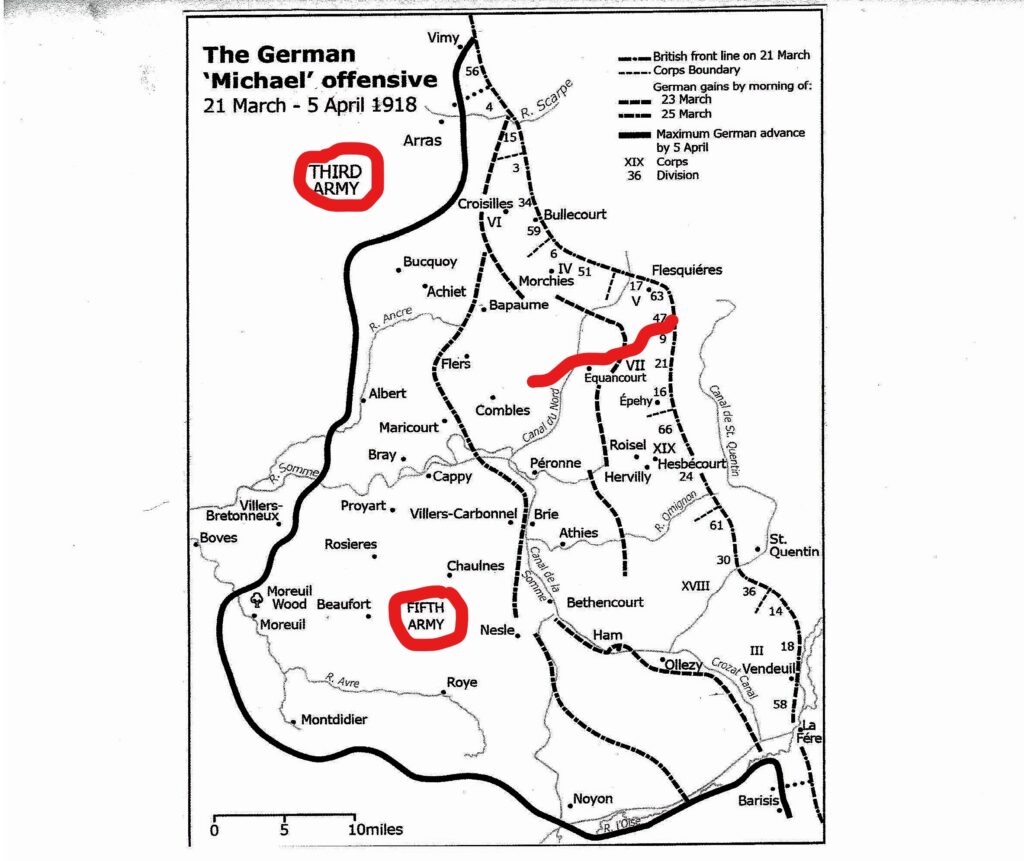
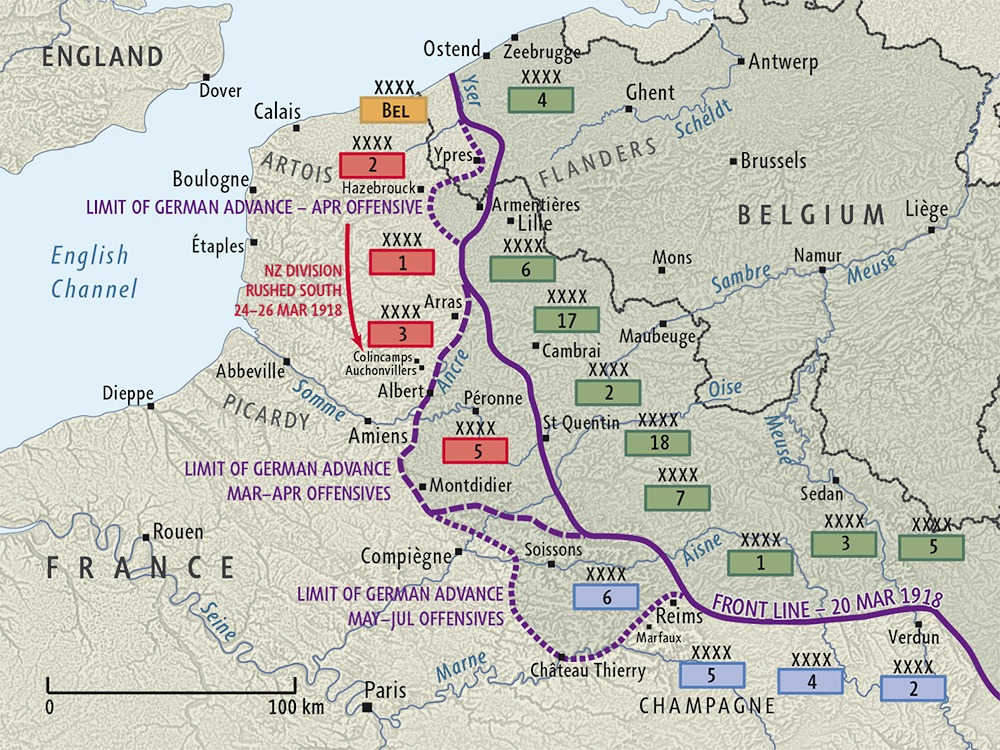
21st March 2026 was the 108th anniversary of the opening of the German Spring Offensive. This huge attack, primarily on British 5th Army front, is reflected in the Lincolnshire Regiment casualties in the In Memoriam section at the foot of the relevant Trench Lincs. (105 dead – Ed)
The German Spring Offensive, fought between March and July 1918, was Germany’s final large-scale attempt to win the First World War on the Western Front before American forces could arrive in overwhelming numbers. Known in German as the Kaiserschlacht (“Kaiser’s Battle”), the offensive consisted of a series of coordinated attacks designed to break the stalemate of trench warfare that had dominated the conflict since 1914. Although the offensive initially achieved dramatic successes and threatened Allied positions, it ultimately failed to secure a decisive victory and exhausted German resources, contributing to the eventual defeat of Germany later in 1918.
Strategic Background
By early 1918 the strategic situation had changed significantly. The collapse of the Russian Empire after the Russian Revolution allowed Germany to sign the Treaty of Brest-Litovsk, which ended the war on the Eastern Front. This freed up around fifty German divisions that could be transferred to the Western Front. German leaders, especially General Erich Ludendorff, believed this temporary numerical advantage provided a narrow window to defeat the Allies before the rapidly growing forces of the American Expeditionary Forces could fully deploy.
Germany’s strategic objective was not necessarily to capture Paris immediately but to split the British and French armies. If the British forces were pushed back toward the Channel ports and cut off from their supply bases, Germany hoped Britain might be forced to negotiate peace. To achieve this, Ludendorff planned a series of offensives targeting weak points in the Allied lines.
Operation Michael (March 1918)
The first and largest attack, Operation Michael, began on 21st March 1918. The offensive targeted the undermanned British Fifth Army along the Somme sector, an area devastated by earlier fighting during the Battle of the Somme. The Germans used new tactics that differed from earlier mass assaults. Specially trained “stormtrooper” units infiltrated weak points in enemy defences, bypassing strongpoints and advancing quickly into the rear areas.
The attack began with a massive artillery bombardment using high explosives and poison gas. Dense fog helped conceal the advancing German infantry, and the British lines were rapidly overwhelmed. In the first days of the offensive the Germans achieved their greatest advances on the Western Front since 1914, pushing Allied forces back over many miles.
However, despite the dramatic gains, German forces struggled to maintain momentum. Supply lines could not keep up with the advancing troops, and the devastated battlefield made movement difficult. The objective of capturing the critical railway centre of Amiens was not achieved. Meanwhile, the crisis forced Britain and France to coordinate more closely.
Allied Command Unity
The danger posed by the German advance led the Allies to appoint a unified commander. On 26th March 1918, French General Ferdinand Foch was given overall command of Allied forces on the Western Front. This decision improved coordination between British, French, and American units and helped stabilise the front.
Despite severe pressure, the Allies managed to halt the German advance near Amiens in early April. Operation Michael ended without achieving its strategic goals, though the Germans had captured large areas of worthless and devastated territory.
Operation Georgette (April 1918)
After Operation Michael stalled, Ludendorff launched another offensive in Flanders called Operation Georgette in April 1918. The aim was to capture key Channel ports such as Calais and Dunkirk, which were vital for British supply and reinforcement.
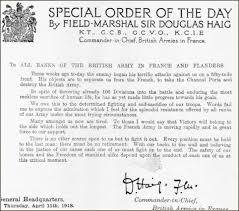
The German attacks initially forced the British back and threatened the town of Ypres, a symbolically important location due to earlier battles such as the First, Second and Third Battles of Ypres. Once again, however, the Germans achieved tactical successes but could not translate them into decisive strategic results. Following Douglas Haig’s famous ‘Backs to the Wall’ speech, allied resistance stiffened, reinforcements arrived, and German casualties mounted.
Later Offensives (May–July 1918)
Ludendorff continued launching additional offensives throughout the spring and early summer. These included Operation Blücher–Yorck in May, which targeted French lines along the Aisne River. The attack was initially very successful, and German troops advanced rapidly toward Paris, causing panic among civilians and governments.
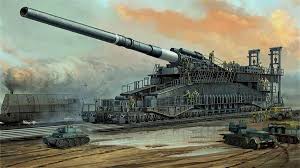
German forces reached the Marne River, less than 50 miles from the French capital. Long-range artillery such as the famous “Paris Gun” even shelled the edge of the city. However, as with earlier attacks, German troops outran their supplies and became increasingly exhausted.
The final phase came with the Second Battle of the Marne in July 1918. German forces attempted one more push but encountered stronger Allied defences and significant American participation. This time the Allies launched a powerful counter offensive that forced the Germans to retreat.
Reasons for Failure
Several factors explain why the Spring Offensive ultimately failed despite early success. First, Germany lacked clear strategic objectives after the initial breakthroughs. Ludendorff often redirected attacks opportunistically rather than concentrating on decisive targets.
Second, German logistics were insufficient. Advancing troops depended on captured Allied supplies because their own transport systems could not move quickly across the shattered landscape of the Western Front. As the offensive progressed, shortages of ammunition, food, and reinforcements slowed operations.
Third, the Allies increasingly benefited from American manpower. By mid-1918 hundreds of thousands of fresh American troops were arriving each month, strengthening Allied defences and morale.
Finally, German casualties were extremely heavy. Many of the highly trained ‘stormtroopers’ were lost in the early phases of the offensive and could not be replaced easily.
Consequences
Although the Spring Offensive temporarily threatened Allied defeat, its failure marked a turning point in the war. Germany had used up its last reserves in a series of costly offensives that achieved no decisive victory. When the Allies launched their own counteroffensives during the Hundred Days Offensive, German forces were too weakened to resist effectively.
The Spring Offensive therefore represents Germany’s final gamble in the First World War. It demonstrated new tactics and temporarily shattered the trench stalemate, but it also exposed the limits of German military power by 1918. Within months of its failure, the balance of the war shifted permanently in favour of the Allies, leading to the Armistice of 11th November 1918 and the conclusion of the conflict.
In summary, the German Spring Offensive was a bold but ultimately unsuccessful attempt to secure victory before American intervention could change the balance of the war. Its early successes created one of the most dramatic crises of the war for the Allies, yet its failure exhausted Germany’s remaining manpower and their last opportunity for victory, and paved the way for the final Allied advance that ended the First World War on the Western Front.