

4th January 1915.
The original BEF that landed in France in August 1914 comprised of two Corps and initially four and shortly after, six infantry divisions. By January 1915, this original regular army had ceased to exist, the losses at the 1st Battle of Ypres had shattered the BEF, the Kitchener volunteers were not ready to fight and yet the BEF, still commanded by Sir John French, had grown to two Army Groups, commanded by Haig and Smith-Dorrien.
The BEF held the line from just north of Ypres to the Franco-Belgian border. Regular battalions stationed in the Empire had returned home, more Territorial Force battalions were committed overseas, and most importantly, large numbers of Indian and later Canadian troops had started to arrive on the Western Front.
Politically, Winston Churchill was pushing his great plan to end the war in the east rather than in the west by using the Royal Navy to force the Dardanelle Straits and capture Constantinople (Istanbul today). When the naval assault failed in March 1915, troops were landed on the Gallipoli peninsular in April and August and another bloody stalemate ensued.
4th January 1916.
Following the handling of the Battle of Loos in September and October 1915, Sir John French had been sacked as C-in-C of the BEF on December 19th and his command was taken over by Sir Douglas Haig.
On January 4th, Haig was only just feeling his way into his new role. Haig’s preferred offensive for 1916 was to attack along the Belgian coast and east of Ypres, but he was to be overtaken by events elsewhere. In February 1916, the Germans launched a massive offensive against the French at Verdun, and Haig was forced to fight on the Somme in the summer of 1916 to relieve pressure on the French.
At Gallipoli, the final evacuation of British and allied troops from the peninsular took place in the first week of January 1916. Ironically, the evacuation was the only successful part of the campaign.
4th January 1917.
Haig closed down the Somme offensive in December 1916, and both sides used the winter to draw breath after the colossal casualties incurred in the Somme fighting.
In February 1917, the Germans made a voluntary withdrawal from their forward positions either side of the Somme battlefield to their much vaunted Hindenburg Line.
The French army appointed a new commander in General Nivelle, and the BEF would be forced to fight the Battle of Arras in April/May 1917 in support of Nivelle’s offensive further south.
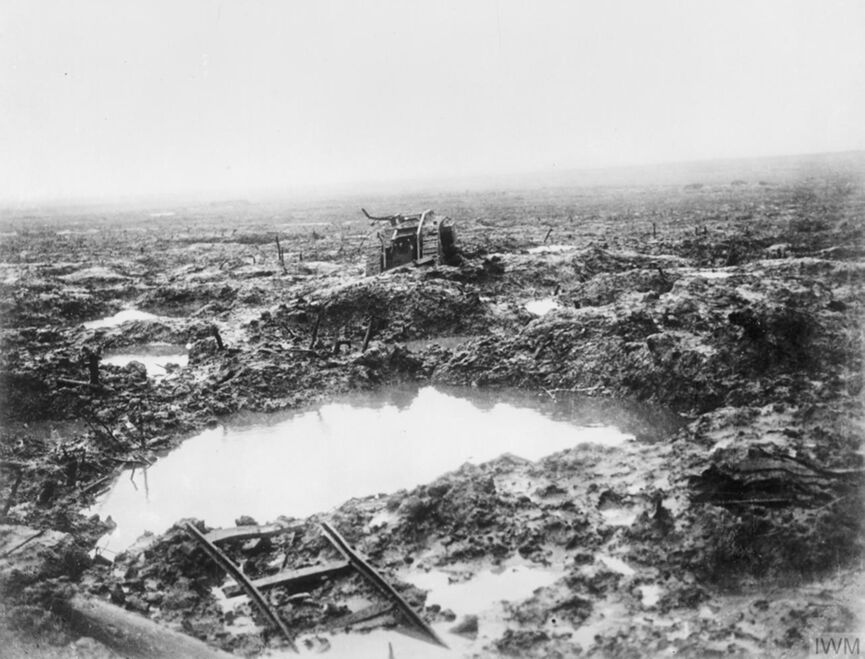
Eventually, Haig would get his wish to attack in Flanders in the late summer and autumn of 1917 – Passchendaele.
4th January 1918.
The BEF on the Western Front was now severely short of men following the 1917 fighting at Arras, Messines, 3rd Ypres and Cambrai. Politically, Lloyd George’s government was holding back the supply of reinforcements and Lloyd George was contemplating removing Haig from his post as C-in-C.
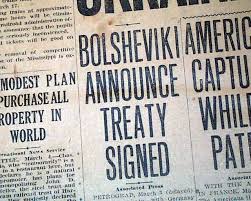
Russia, following the revolution, had signed an armistice with the Germans, and this allowed the Germans to transfer some 500,000 troops from the east to the west. For the first time since 1914, the Germans now outnumbered the allies on the Western Front. This would lead to a spring and early summer of large scale German offensives, their last roll of the dice.
In April 1918, the Entente Allies, France and Britain came as close to losing the war at any time since August 1914.
4th January 1919.
As the 1918 German offensives ran out of steam, the Allies, now including the USA, attacked along a broad front, and as the warfare became mobile once again, the Germans spent three months in full retreat, until the signing of the Armistice which came into effect on 11th November.
In early 1919, the four Allies in the west, Britain, France, America and Belgium all had armies of occupation in sectors of Western Germany. Alsace and Lorraine came under French control once again, and the politicians were preparing for the Peace Conference to be held at Versailles.
For the Tommy at the front, the most pressing topic was demobilisation and the speed or rather, lack of speed of the process, and for the Prisoners of War, repatriation was underway back to their loved ones at home, often after three or four yours of captivity.

Leave a Reply