
The Allied Landings at Salonica, October 1915
The Allied landings at Salonica (now Thessaloniki, Greece) in October 1915 marked an important development in the First World War. The operation was undertaken by Britain and France to support Serbia, which was facing invasion by the Central Powers of Germany, Austria-Hungary and Bulgaria.
Serbia had successfully resisted earlier Austro-Hungarian attacks, but its position deteriorated dramatically in autumn 1915. Bulgaria entered the war on the side of the Central Powers in October, threatening Serbia from the east while German and Austro-Hungarian forces advanced from the north. The Allies feared that Serbia might be overwhelmed and sought to provide assistance through the Greek port of Salonica.
The first French troops began landing at Salonica on 5 October 1915, followed by British forces. The operation took place with the approval of the Greek prime minister, Eleftherios Venizelos, who favoured supporting Serbia and cooperating with the Allies. However, King Constantine I opposed intervention, believing that Greece should maintain neutrality. This disagreement created a serious political crisis within Greece.
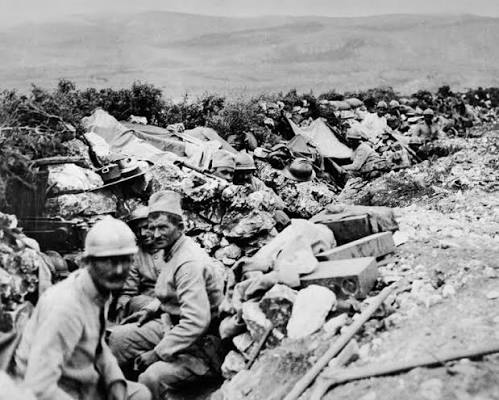
The initial landings involved French troops and Britain’s 10th (Irish) Division, commanded by Lieutenant-General Sir Bryan Mahon. General Maurice Sarrail subsequently took command of the French expeditionary force. Troops, artillery, horses, vehicles and supplies were unloaded, and Salonica began developing into an Allied military base.
The expedition, however, arrived too late to prevent Serbia’s defeat. Allied troops advanced northwards in an attempt to assist the Serbian army, but the Central Powers’ offensive made their position increasingly difficult. The Allied forces eventually withdrew to Salonica in December 1915.
Despite this initial failure, the landings had lasting consequences. Salonica became the principal base for the Allied Salonika Campaign, which continued until the final stages of the war in 1918. The operation also intensified political divisions within Greece and demonstrated the strategic importance of the Balkan theatre. Although the Allies failed to save Serbia in 1915, their establishment of a military presence at Salonica created a new front that would later contribute to the defeat of Bulgaria and the collapse of the Central Powers in southeastern Europe.
Leave a Reply