

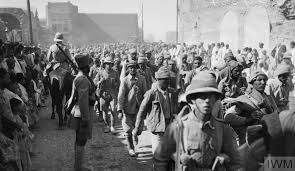
In March 1917, British forces captured Baghdad during the Mesopotamian campaign of the First World War, marking a significant turning point in the struggle against the Ottoman Empire. After earlier setbacks, including the humiliating surrender at Kut in 1916, the British reorganized their strategy under General Sir Frederick Maude. With better planning, improved supply lines, and stronger troop coordination, they advanced steadily up the Tigris River toward Baghdad.
The campaign was methodical and cautious, reflecting lessons learned from earlier failures. British and Indian troops recaptured Kut in February 1917 before continuing their push northward. Ottoman forces, weakened by prior engagements and logistical difficulties, were unable to mount an effective defence. As British forces approached Baghdad, the Ottomans withdrew rather than risk encirclement.
On March 11, 1917, British troops entered Baghdad with relatively little resistance. The capture of the city was both strategically and symbolically important. Baghdad was a key administrative and cultural centre of the Ottoman Empire in the region, and its loss dealt a blow to Ottoman prestige. For the British, it secured control over much of Mesopotamia and helped protect vital oil interests in the Persian Gulf.
General Maude issued a proclamation emphasizing that British forces came not as conquerors but as liberators, attempting to win local support. However, despite initial British rule, they would later face resistance and contribute to long-term political tensions in the region. The capture of Baghdad thus stands as a pivotal moment with lasting consequences beyond the war itself.
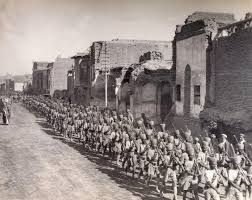
Indian troops enter Baghdad.

Leave a Reply