
With thanks to Jack Prowting for the tale of his Great-Great Uncle.
“110 years ago today, Percy Charles Prowting died of his wounds at a casualty clearing station at Contay, France. He was just 18 years old.
Percy lived with his mother, father, brothers and sisters on Upper Arundel Street Portsmouth, moving there from Fareham in 1911. The following year at the age of 14 he enlisted in the Royal Marines. His records show he was a bugler to begin with. He would have been classed as a ‘Boy’ in rank (Boys are recorded on the Portsmouth Naval Memorial).
When war broke out in August 1914, Percy was assigned to RMS Carmania. Carmania was a Cunard liner converted to carry 8 naval guns. At 15 Percy was sailing off to war. His destination, the Caribbean.
On the 14th September 1914, RMS Carmania engaged the converted German merchant ship SMS Cap Trafalgar. Cap Trafalgar at the time had her appearance altered to disguise herself as Carmania, unaware the real Carmania was nearby. They did this in the hope of infiltrating British fleets. The two ships engaged, with Cap Trafalgar being sunk, but not without cost to Carmania. Percy was wounded in this action, once healed he returned to service, remaining on Carmania into 1915 as they patrolled the Portuguese coast docking at Gibraltar regularly.
In July 1915, Percy is back in Britain. He is assigned to the Portsmouth Division and sent to Deal Depot for training. It was here he received his only disciplinary. 3 days after his 18th birthday he is found with “something in his barrack room” and is confined to quarters for a week.
January 1916 and Percy is among 6,000 troops on board HMT Olympic (Titanic’s sister ship) heading to Mudros to support the evacuation of the Dardanelles. He continues his training but does not see action while stationed here.
By this point Percy is a Private in 2nd Battalion Royal Marines, 63rd Royal Naval Division. Olympic docks in Marseille in May 1916, Percy and the 63rd are transported North. He’s reached his final destination of the war, the Somme.
The 63rd were not involved in the infamous July attack along the Somme. The war diary for the 63rd shows they spent a number of rotations at the front line through the summer and autumn of 1916.
The 63rd were mostly stationed in the small village Englebelmer, the front lines to their North East towards the village of Beaumont Hamel.
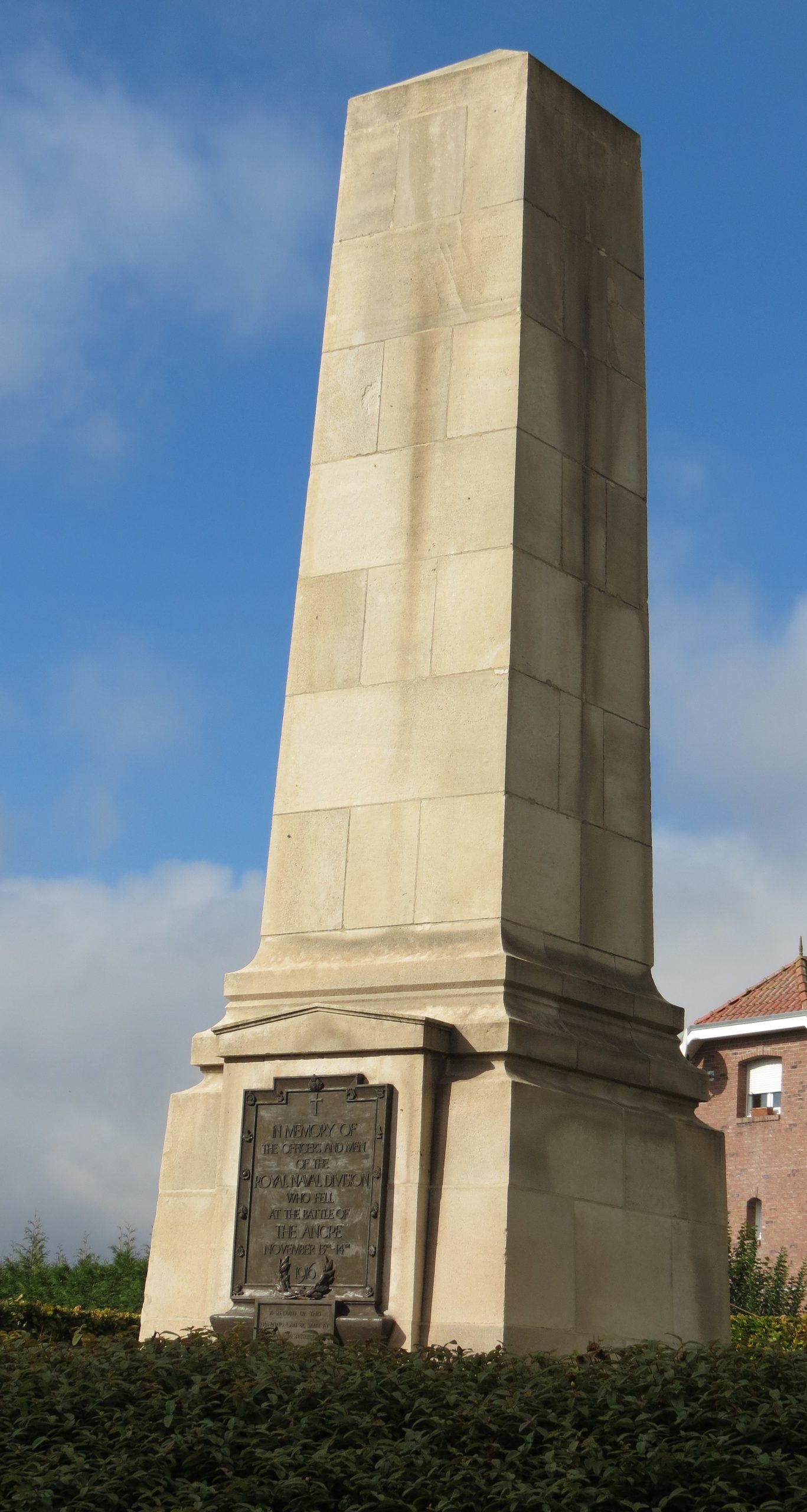
November arrives, preparations are complete for the final chapter of the Battle of the Somme. On the 13th November, at 5:45am, the Battle of the Ancre begins. The objective of this battle would be to capture objectives that were not achieved in July.
Percy would be in the second wave, the 2nd Royal Marines were to leap frog 1st Royal Marines and capture the German second line. 8 battalions of Royal Marines went over the top that day. To their left the 51st Highlanders assaulted the infamous Y-Ravine where the Newfoundlanders were slaughtered on 1st July. To their right the swollen waters of the River Ancre.
The assault began in foggy conditions. To the misfortune of the 3 battalions in the first wave, the Germans had built a reinforced redoubt into No Mans Land, the machine guns opened up and casualties mounted. The second wave attacks to reinforce, becoming pinned down as well.
1st and 2nd Royal Marines are forced across the divisional boundary and begin fighting alongside the 51st Highlanders. They now share a cemetery at the Beaumont Hamel Y-Ravine cemetery.
The request for tank support was made. Originally 6 MKI tanks were stationed at Auchonvillers to support the attack but they were mistakenly sent away and had to be called back. They wouldn’t arrive until dawn on the 14th. 3 tanks made it to the German redoubt successfully knocking it out allowing for the first objective to be consolidated.
Hood Battalion saw the greatest success on the 13th. Their ferocious attack on the German trenches saw them achieve all of their objectives, digging in near the village of Beaucourt-sur-l’Ancre. They were running low on bombs (grenades), thanks to the efforts of the Sherwood Foresters, they were immediately provided with 500 bombs via a temporary railway bridge across the Ancre. Reports from Hood Battalion say that a German counter attack was likely from a wood nearby, divisional artillery was diverted to the wood. The counter attack never came.
It’s not known if Percy was wounded on the 13th or 14th November. We also do not know how he was wounded. It is likely that he is wounded on the 13th. He is not transported to the casualty clearing stations that were designated to the 63rd Royal Naval Division, instead he ends up in Contay. Here on the 14th November, he succumbs to his wounds.
He is buried in Contay British cemetery. His family requested the inscription “THOUGH DEATH DIVIDES FOND MEMORIES CLING FROM HIS LOVING MOTHER SISTERS, BROTHER”. His father is missing from the inscription having passed away in 1915. His older brother Albert survived the war, serving in the Royal Field Artillery.
My great grandfather, Leslie was 10 when Percy enlisted in 1912 and so likely had few memories of Percy. His memory faded in our family until I went on a battlefields tour with school in year 9. All we knew then was he shared our name. I paid my respects then and committed to researching his story since. Almost 20 years later and there is still much that isn’t known. No photos, his medals, commemorative death plaque, all missing.
Recently, I contacted the Commonwealth War Graves Commission with a copy of his original birth certificate from the National Archives requesting his age be corrected. In grief its likely his mother recorded him as 19 rather than 18. His headstone is due to altered as well, when we visit him in December at hope it is done.
We keep his memory alive today, visiting his grave each time we visit France. Telling his story to our children, so they know of his courage. So they understand the enormous cost of war, the futility of conflict.
He was a boy, who did his duty, showed immense bravery and never got to see his home again. A life still full of potential, given for our tomorrows. We will remember him, we will remember them all.
Rest in Peace
Percy Charles Prowting, aged 18
PO/16098
Private
2nd RM Btn 63rd RND”
I am still piecing together much of his life through ancestry records and the National Archives, though there isn’t much to go on for someone who lived such a short life.
I still hold out hope that I’ll find a photograph of him or be able to track down his medals or death plaque.
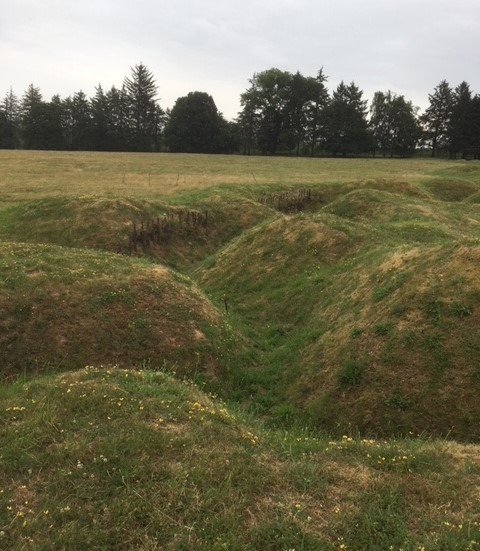
We are blessed really, knowing the exact place he was stood on the 13th November 1916. Able to walk the ground he fought on thanks to the preservation of the Newfoundland Memorial park. Its always a sobering and deeply moving visit. I am thankful he has a grave, so many men were lost to the battlefield, I’m grateful that I have somewhere to reflect.
I make a point of ending my holidays in France by visiting his grave and walking the battlefield. Without their sacrifice, who knows, I might not have been able to enjoy a holiday in such a beautiful country. I think it’s incredibly important that my children visit, understanding that he isn’t just a name, that he was a real person full of potential, who gave everything. My eldest took part in her first Remembrance Day parade in Spalding this year with her rainbows troop. I’m very proud to say the least.”
Leave a Reply