
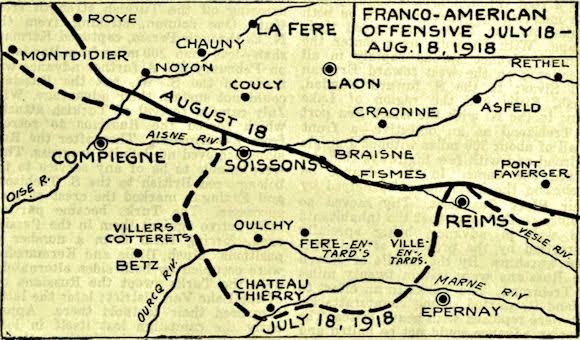
The French attack between Soissons and Château-Thierry on 18 July 1918 marked one of the decisive turning points of the First World War. It was launched in response to Germany’s final major offensive, which had begun on 15 July 1918 during the Second Battle of the Marne. German forces hoped to achieve a breakthrough that would force the Allies to negotiate peace before growing American military strength could be fully deployed. Instead, the offensive stalled, providing the Allies with an opportunity to seize the initiative.
Marshal Ferdinand Foch, the Allied Supreme Commander, had anticipated the German attack and prepared a carefully coordinated counteroffensive. French intelligence had gathered valuable information about German plans, allowing Allied commanders to position their forces effectively. When the German advance failed to achieve its objectives, Foch ordered a surprise attack against the exposed western flank of the German salient between Soissons and Château-Thierry.
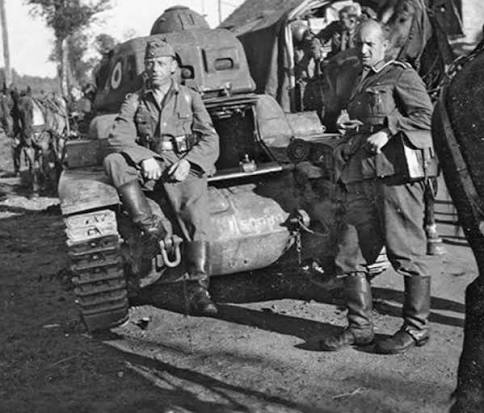
The counteroffensive began at dawn on 18 July without the lengthy artillery bombardment that had characterized earlier battles. Instead, the French relied on surprise, speed, and close cooperation between infantry, artillery, tanks, and aircraft. The main assault was carried out by the French Tenth Army under General Charles Mangin and the French Sixth Army under General Jean Degoutte. They were supported by British, Italian, and rapidly increasing numbers of American troops. More than 350 French tanks, many of them Renault FT light tanks, played a crucial role by crushing barbed wire and supporting infantry as they advanced across difficult terrain.
The initial attack achieved remarkable success. German forces, caught off guard by the sudden assault, struggled to organize an effective defence. French troops rapidly captured villages, key road junctions, and commanding high ground. The advance threatened the German supply lines supporting troops deeper within the Marne salient. The capture of important positions near Soissons placed the main German communications network under severe pressure and forced German commanders to reconsider their entire position.
American divisions fought alongside the French with determination, particularly near Château-Thierry, where they helped prevent further German advances and participated in the Allied counterattack. Although many American units lacked extensive combat experience, they demonstrated increasing effectiveness and contributed significantly to the offensive’s success. Their growing presence also signaled that Allied manpower was steadily increasing while Germany’s resources were becoming exhausted.
The German High Command, led by General Erich Ludendorff, quickly recognized the danger posed by the Allied breakthrough. Faced with the risk of encirclement, German forces began an orderly withdrawal from the Marne salient. Although they conducted effective rear-guard actions, they could not prevent the Allies from steadily advancing. By early August, the Germans had abandoned the gains made during their spring offensives, returning to positions much closer to where they had started months earlier.
The French attack between Soissons and Château-Thierry had far-reaching consequences. It ended Germany’s final offensive capability and shifted the strategic initiative permanently to the Allies. The victory demonstrated the effectiveness of combined-arms tactics, close Allied cooperation, and unified command under Foch. It also boosted Allied morale while undermining German confidence. The success of the counteroffensive paved the way for the Hundred Days Offensive, a series of relentless Allied attacks that forced Germany into continuous retreat and ultimately led to the Armistice on 11 November 1918. As a result, the attack launched after the German offensive of 15 July stands as one of the most important operations of the war, marking the beginning of the end for Germany’s hopes of victory on the Western Front.
Leave a Reply